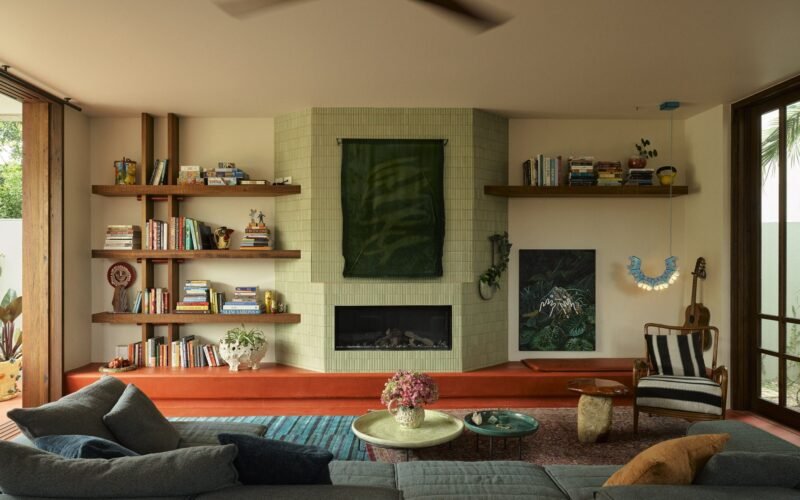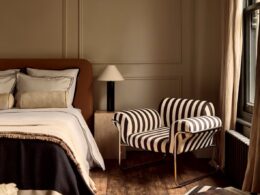

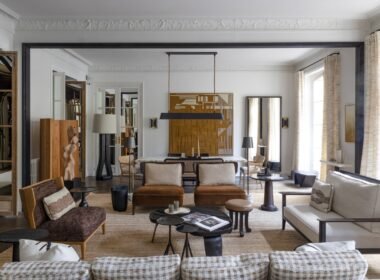


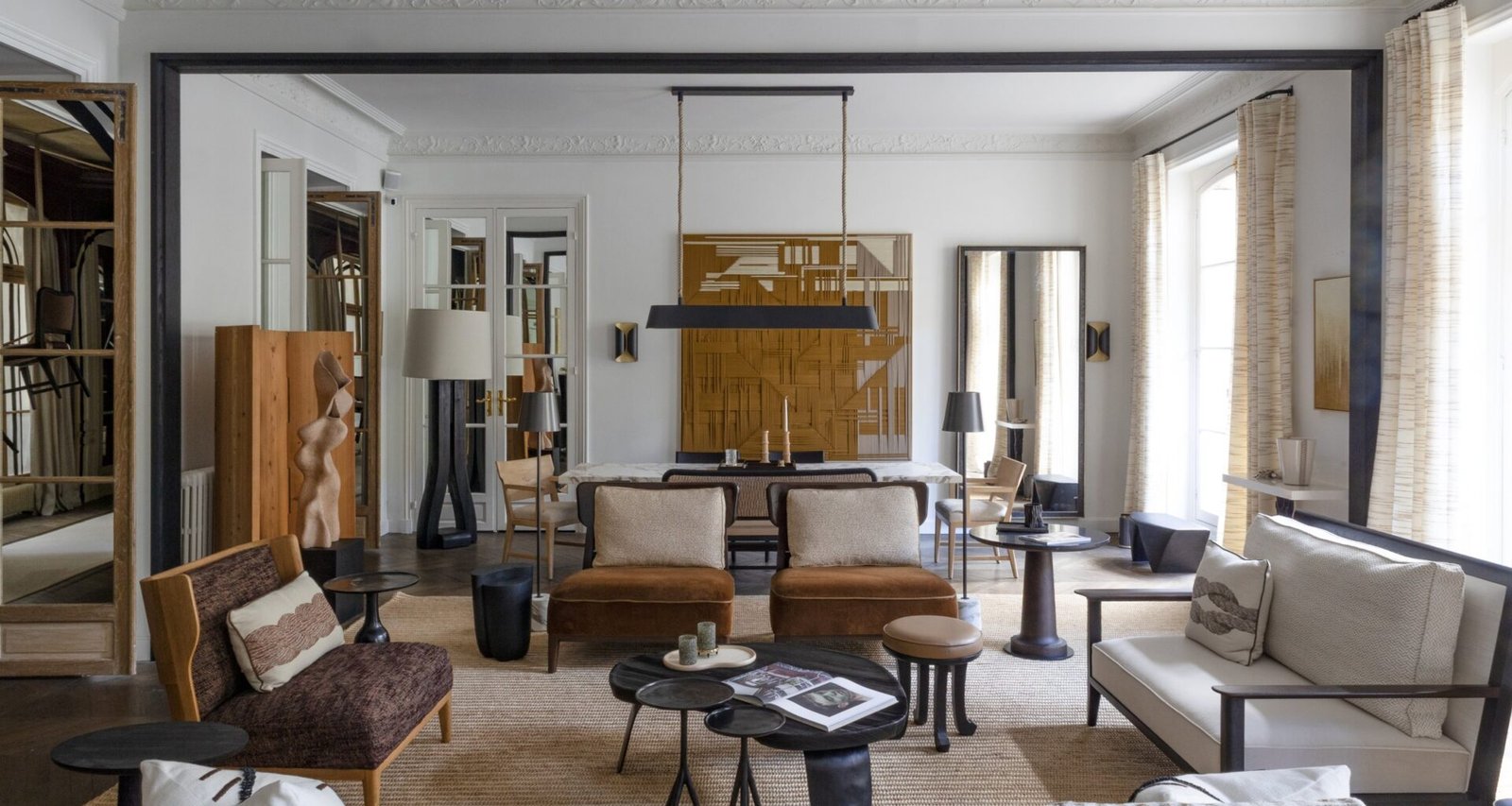
A checked sofa beside gauzy curtains; a woven wool rug beneath a smooth, sculptural chair. Layering texture gives a room depth through the way materials meet. New work from Métaphores, Warli and Giulio Caponi offers three distinct starting points, from the scale of a sitting room to a single embroidered detail.
Let materials do different things
A room can be beautifully furnished and still feel strangely flat. Often, the missing ingredient is a change of surface: something that catches the light beside something that absorbs it, or a loose weave against a clean, polished edge. To layer texture well, begin with those relationships. Colour holds a scheme together; texture gives each part its own presence.
This does not require replacing the furniture or covering every surface. Look first at what is already there. A glossy table, a timber floor and a heavily upholstered sofa create different conditions from a room filled with linen, pale stone and open shelving. The useful addition is the one that brings another quality into the composition – a translucent curtain, a clearly drawn pattern or a small piece whose stitching invites a closer look.
Give the window a softer edge
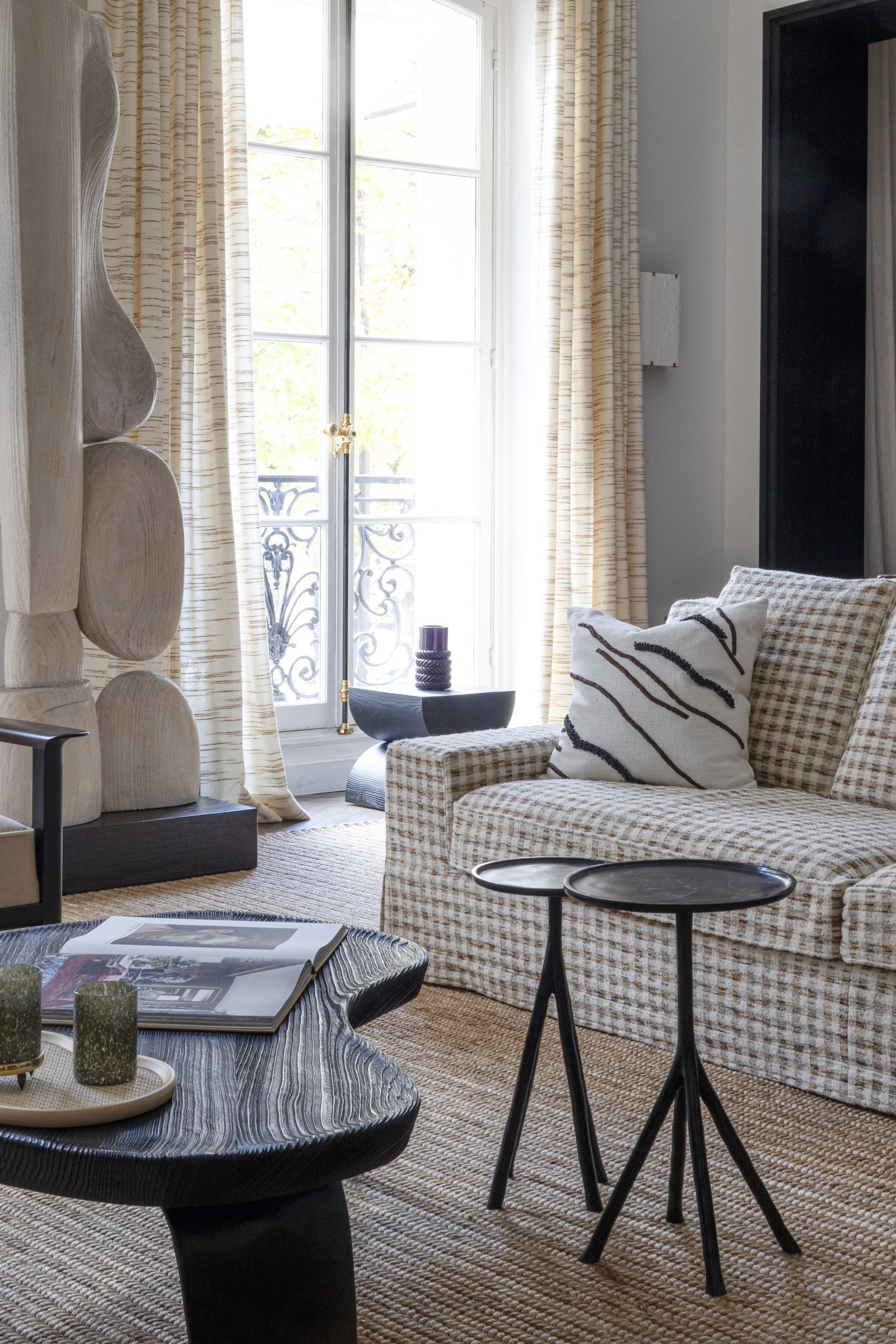
At Sillons, the Métaphores presentation in Gilles & Boissier’s Paris apartment-showroom, the interest lies in the proximity of very different surfaces. A small check animates the sofa, while curtains filter the daylight behind it. Dark tables and frames give the fabrics a crisp outline. The arrangement feels composed because the textiles do not all have the same weight or density.
The presentation brings the 2026 Fragments capsule into the designers’ avenue Montaigne rooms. Its broader mix of wool, linen, cotton and velvet suggests a useful approach at home: consider curtains and upholstery together, even when you are changing only one. Hold a curtain sample up to the window, then set it beside the seat fabric. A cloth that looks substantial on a sample card can become unexpectedly delicate when light passes through it.
The relationship between upholstery and curtains is less about matching than deciding where the eye should settle. Against a patterned sofa, an open-weave curtain introduces a quieter texture, its character revealed as daylight passes through the threads. Plain upholstery leaves more room for a curtain with a generous motif or pronounced folds. A shared colour can connect the two, while differences in scale, density and finish give each fabric its own place in the room.
Draw the room together with wool
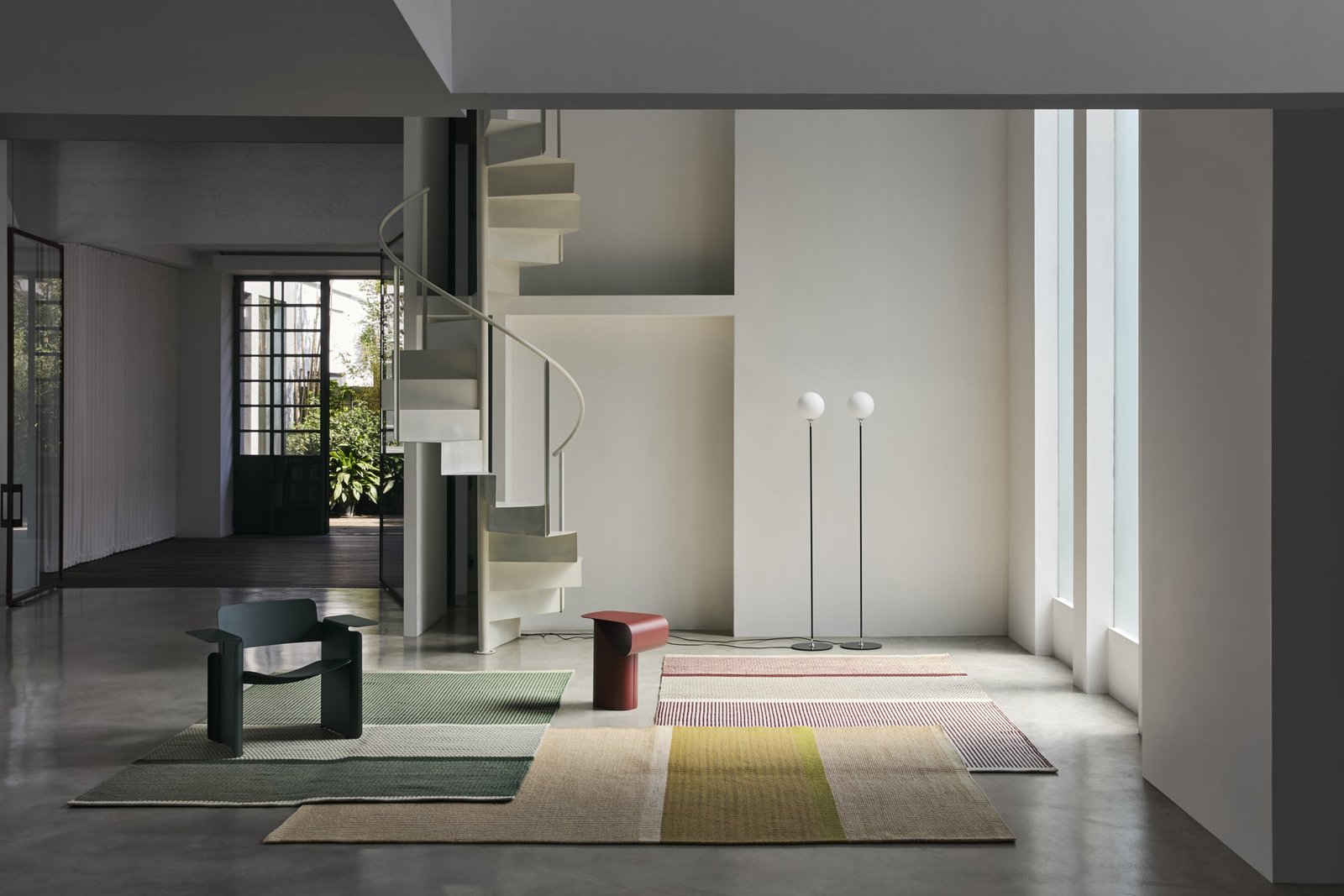
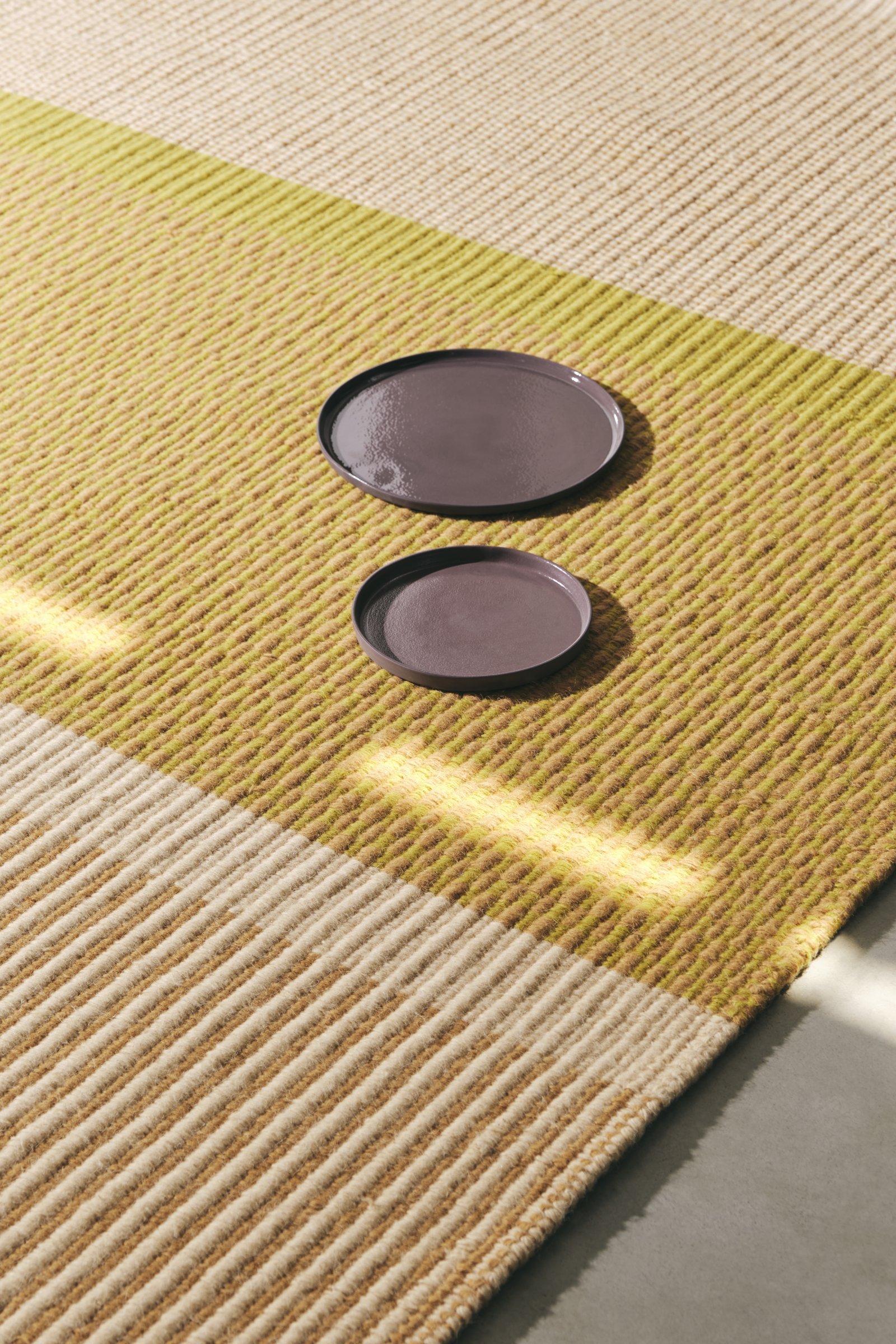
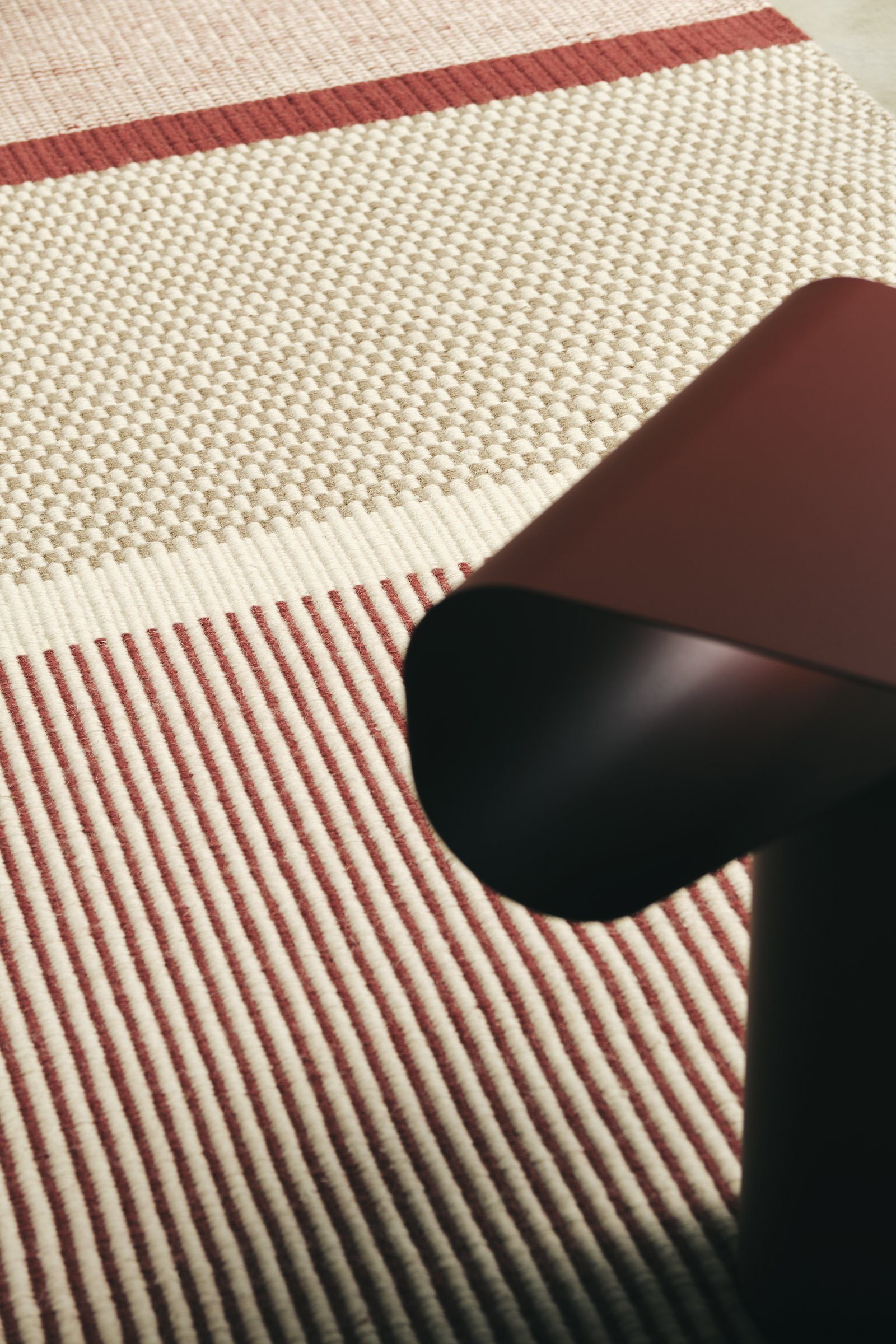
A rug gives texture a generous surface to occupy. Limes, designed by Paolo Zani for Warli in 2026, combines wool with a graphic arrangement of two colours. It is woven on a traditional handloom using the panja technique, in which a wide-toothed metal comb compacts the weft. The pattern is legible from across the room; close up, the woven surface becomes equally important.
That change of scale is useful when choosing a rug. View the whole design before falling for a small swatch, and mark its intended dimensions on the floor. Allow enough of the pattern to remain visible around the furniture. A low table with an open base will reveal more of it than a solid, oversized piece.
A patterned rug can also supply the colour for a smaller accent elsewhere. Choose one shade for a cushion or a lampshade, then vary the material. Repeating the colour creates continuity without buying a matching set. Our guide to striped interiors explores how a clear graphic rhythm can give an otherwise varied room a sense of order.
Keep one detail worth discovering
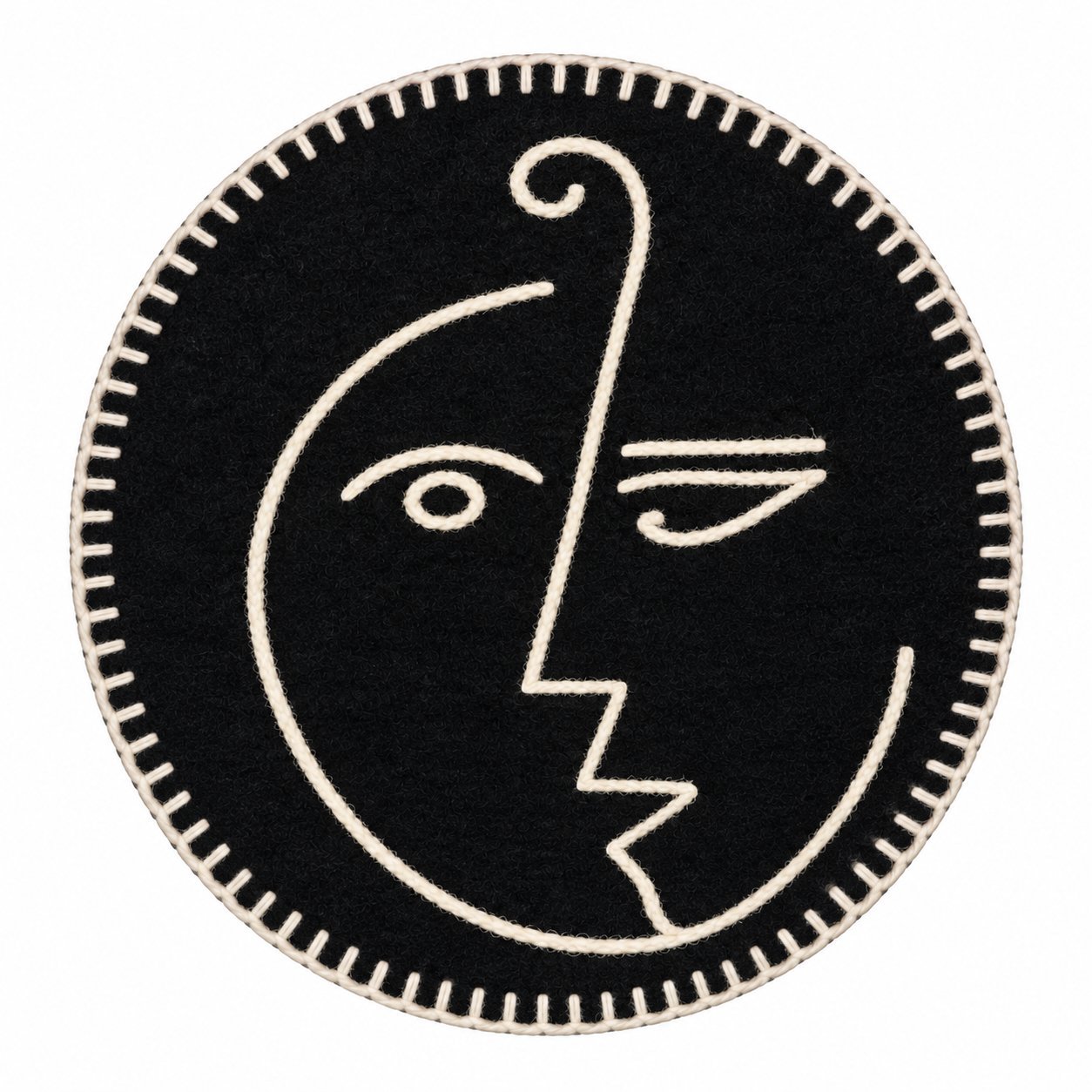
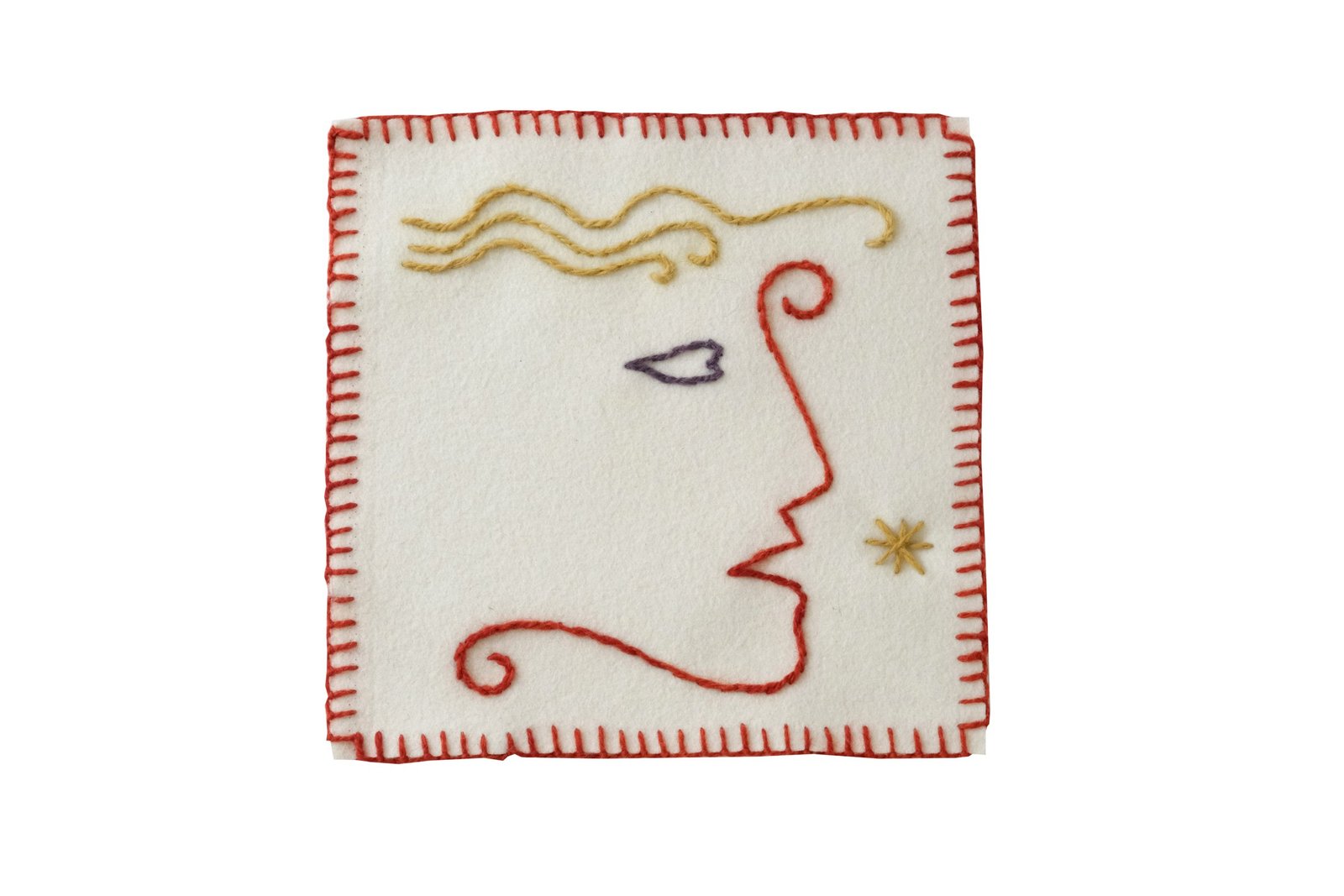
Not every textile needs to fill a wall or cover a floor. Introduced in November 2026, Giulio Caponi’s Celeste ardore and Eros bring felt and stem-stitch embroidery to a smaller, more intimate scale. The square Celeste ardore measures 40 by 40 centimetres; Eros is a 52-centimetre disc. Both are unique pieces, with drawn motifs translated into raised lines of thread.
These are objects to place thoughtfully rather than scatter through a room. On a console or side table, an embroidered textile can sit beside a ceramic vessel or a stack of books, making the distinction between soft and hard surfaces immediately apparent. Leave some of the tabletop visible so that the embroidery has room to be seen. Caponi’s wider textile practice offers a reminder that pattern can carry a personal, figurative language as well as a decorative one.
Leave room for contrast
The most convincing combinations give the eye somewhere to rest. Pair a pronounced weave with a smoother surface, or keep the larger upholstery calm when the rug and artwork are already expressive. A room can be rich in texture without being crowded with objects.
Before making a final choice, bring the samples into the room together. Check them in daylight and under the lamps you use in the evening, looking from the doorway as well as close up. What matters is how the materials behave in that particular setting. The layered furnishings of Rodolphe Parente’s Experimental Roma show how much character can come from letting distinct materials remain distinct. Start with one such contrast at home, and let the next choice answer it.
Design & photography
Métaphores × Gilles & Boissier: Sillons, Paris, 2026; images courtesy of Métaphores. Warli: Limes, Paolo Zani, 2026; photography Sara Magni. Giulio Caponi: Celeste ardore and Eros, November 2026; photography Paolo Biava.