
After a period away from their Valencia studio, Ana Hernández and Christophe Penasse have returned with a different idea of what design should feel like. Unveiled at Maison&Objet 2026, their installation Feel the Shift offers a glimpse of a more intimate, tactile and imaginative Masquespacio.
Masquespacio has never had much interest in being discreet. Across restaurants, hotels and retail spaces, the Valencia-based studio has built an unmistakable visual language: assertive colour, bold geometry and an irreverent sense of theatre. Authentic Interior explored this language at Ichi Station in Milan, where colour and light turn a restaurant into an immersive setting.
But even a distinctive creative identity can become something its authors feel compelled to question.
For Ana Hernández and Christophe Penasse, the founders of Masquespacio, a period of reflection in Bali prompted a reconsideration of their practice. The question was no longer simply how to create memorable interiors, but what kind of spaces they wanted to make, how they wanted to work and what they hoped people would experience within them.
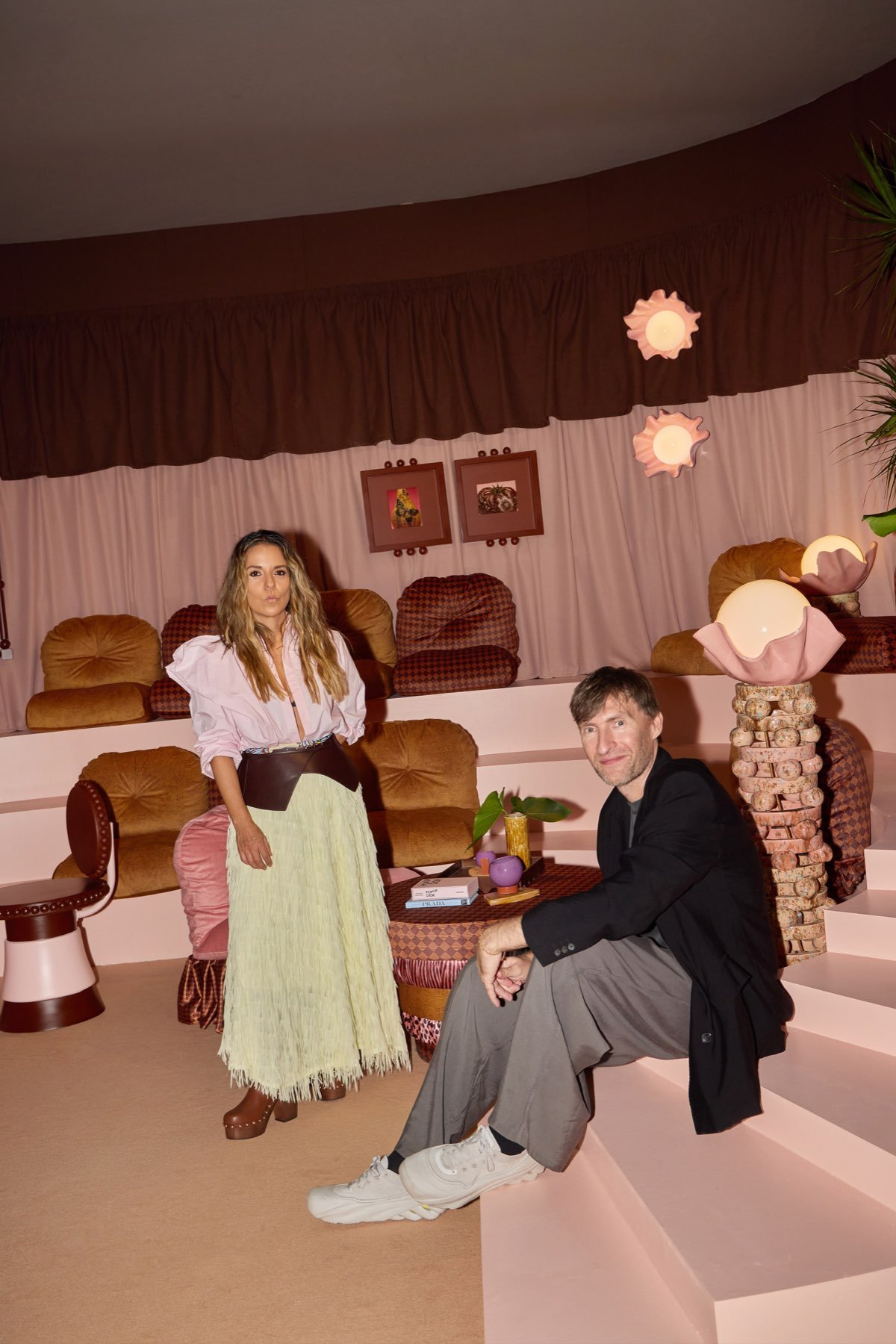
Their response appeared in Paris in September 2026.
Presented at Maison&Objet, Feel the Shift is a 150-square-metre installation conceived as an imaginary home. It marks a new chapter for both Masquespacio and Mas Creations, the studio’s expanding universe of furniture, lighting, objects and artworks.
The colours are still there. So is the humour. Yet something has changed beneath the surface.
A Different Kind of Exuberance
The most interesting thing about Feel the Shift is that Masquespacio has not abandoned the qualities that made its work recognisable.
Instead, the studio has begun to explore what happens when the familiar graphic confidence of its interiors becomes more layered, decorative and tactile.
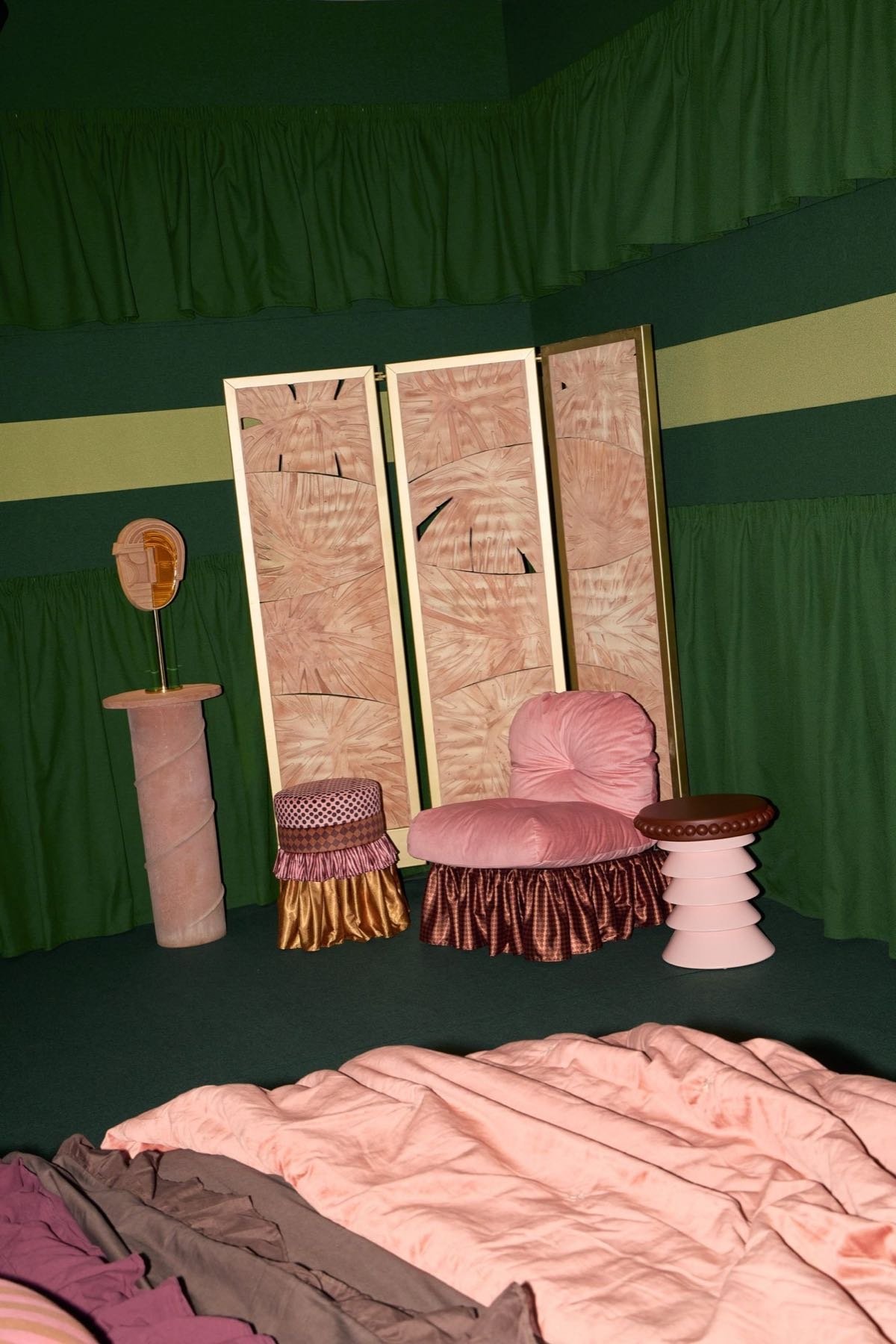
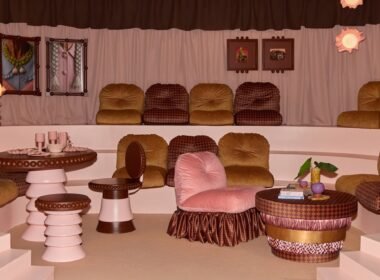
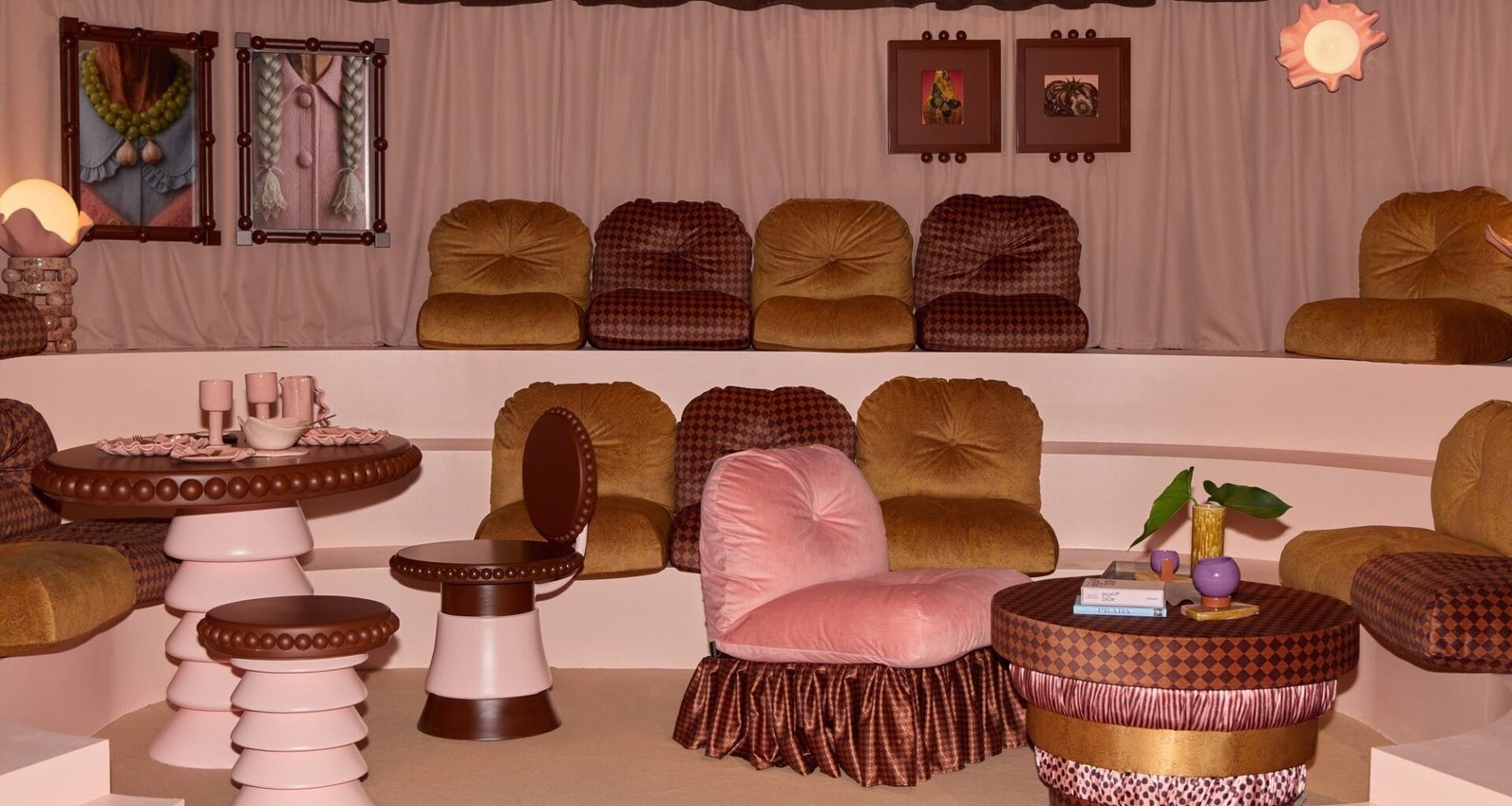
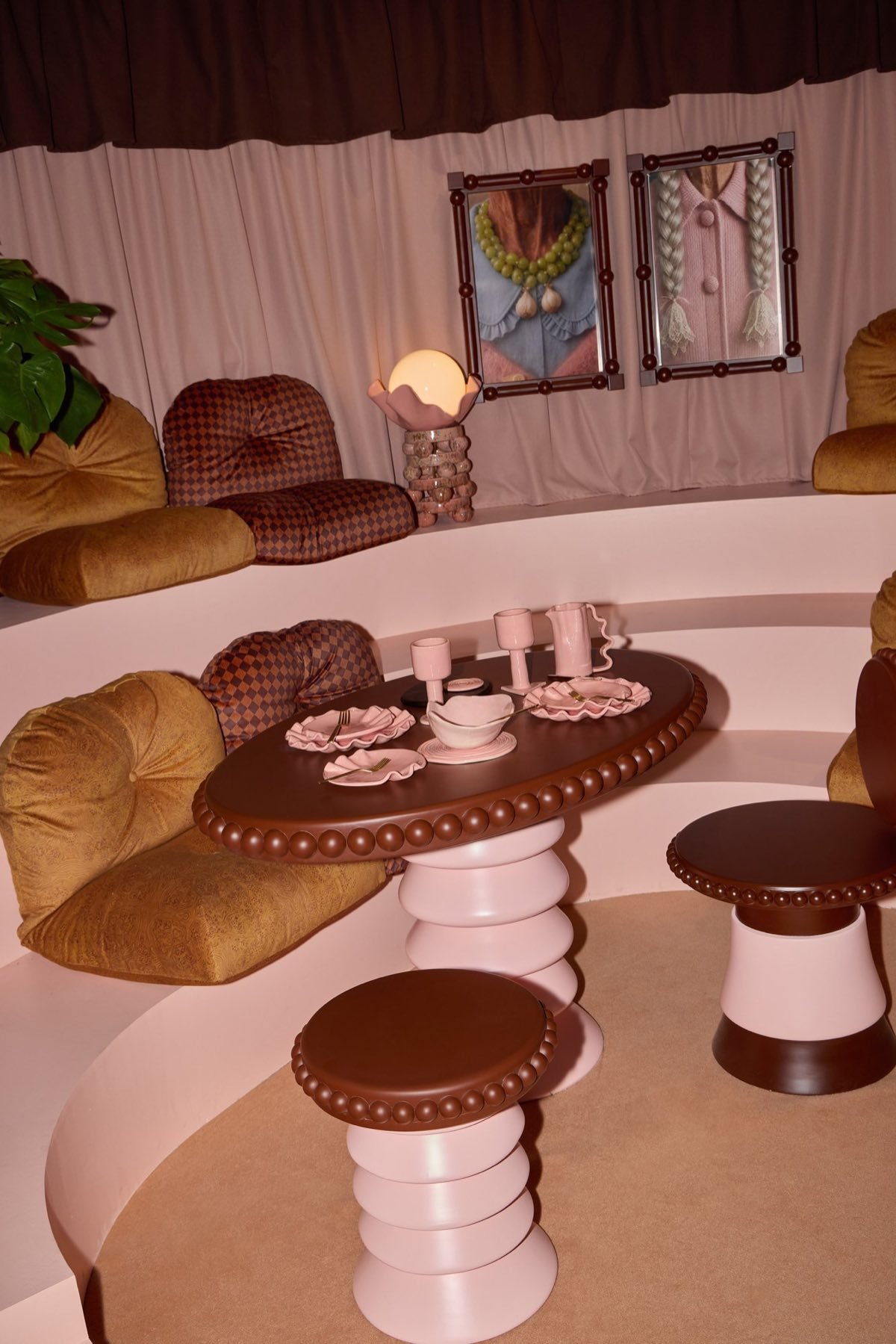
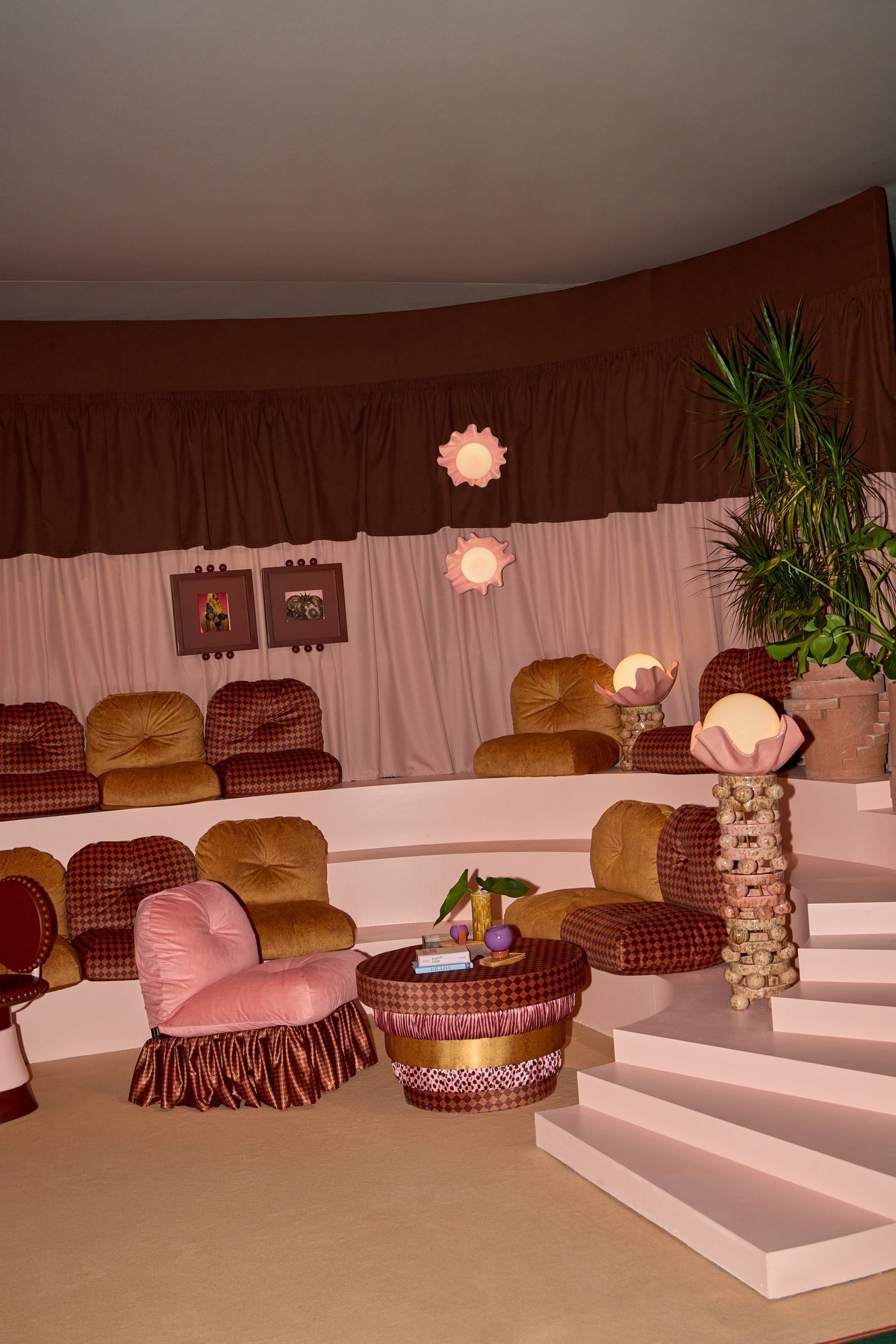
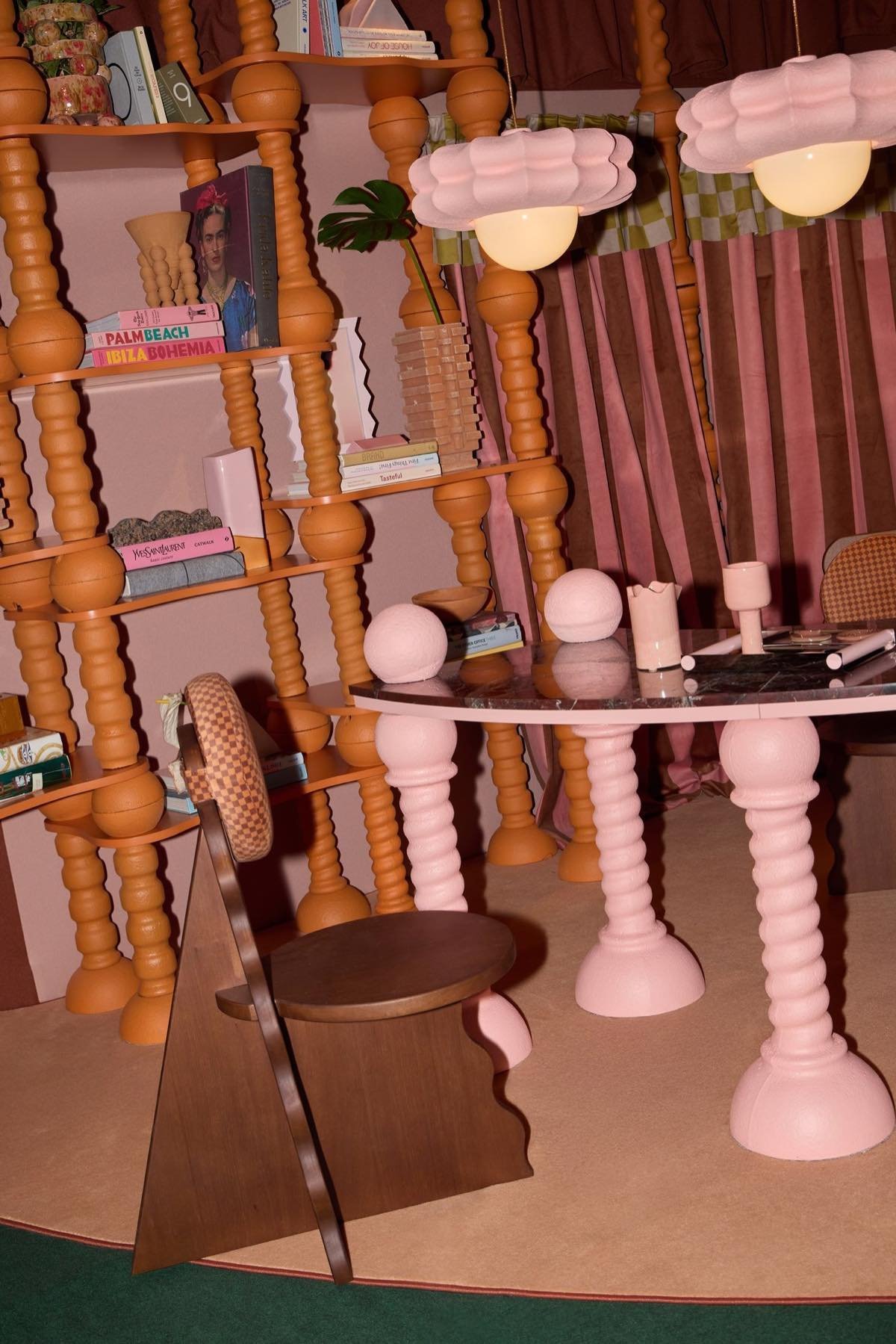
At the centre of the installation, a living area unfolds almost like a small domestic amphitheatre. Softly stepped seating, upholstered furniture, fringed surfaces and sculptural lighting create a room that is theatrical without being entirely devoted to spectacle.
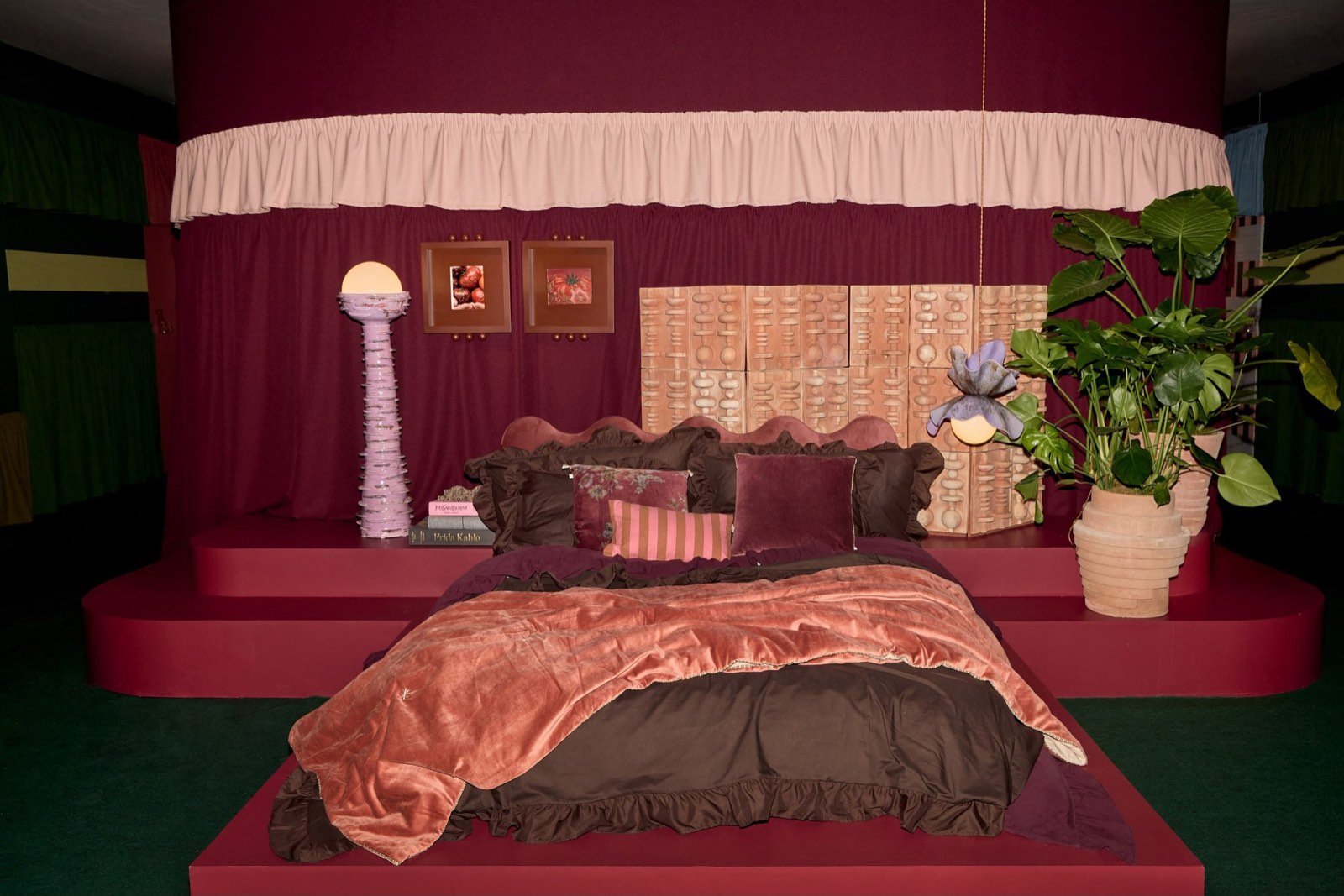
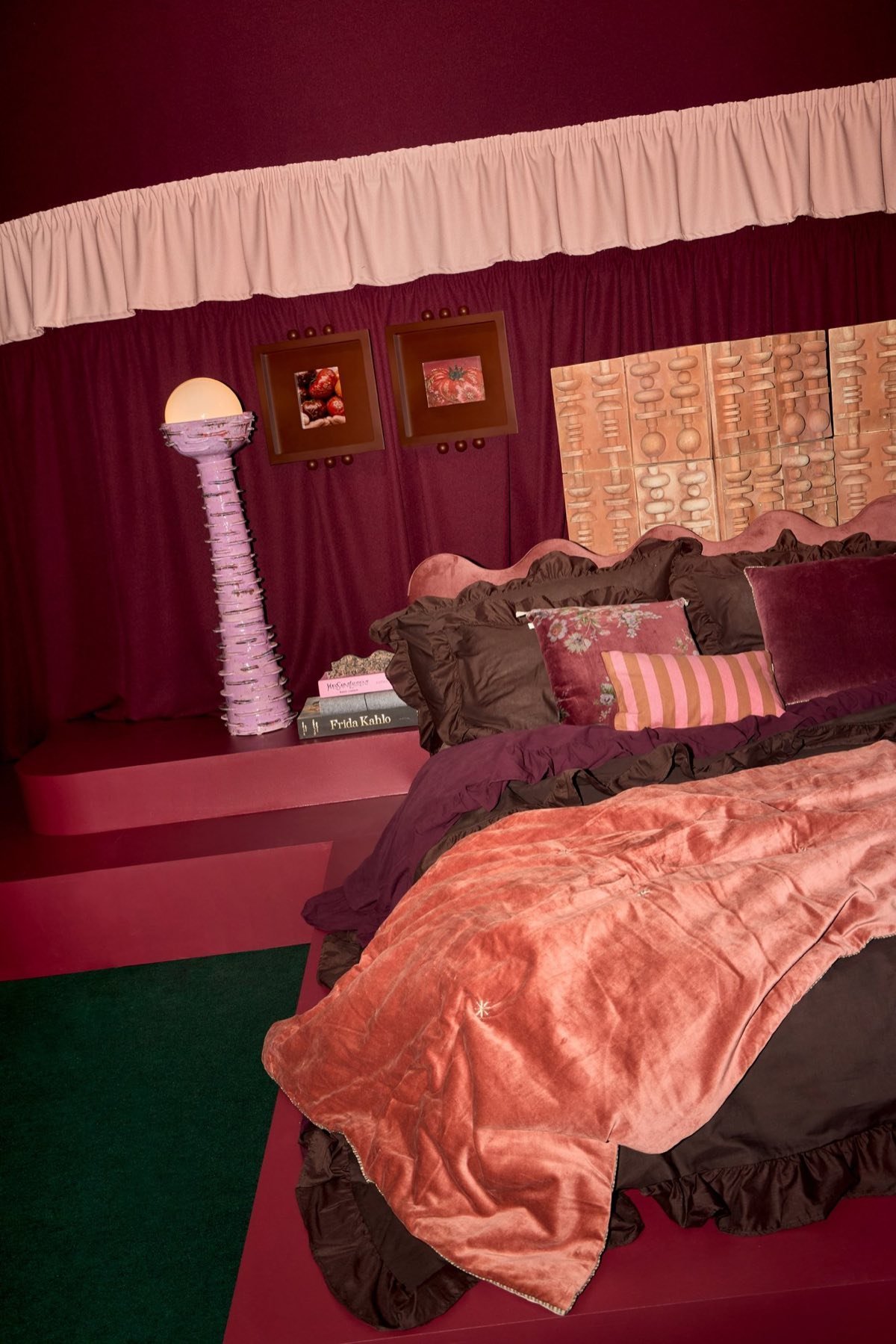
The palette moves through pink, mustard, terracotta, burgundy and chocolate brown. Curtains soften the architecture, while decorative objects and artworks introduce a sense of accumulation.
There is a deliberate contrast between the clarity of the underlying forms and the looseness of the surrounding details.
Earlier Masquespacio projects often found their strength in the relationship between geometry and colour. Here, fabric, ornament and materiality are given greater freedom to shape the atmosphere.
It is not a retreat into restraint. Rather, the studio is discovering a different form of abundance.
When an Installation Begins to Feel Like Home
For a design-fair installation, choosing the idea of home is a surprisingly thoughtful gesture.
Temporary exhibition spaces are often designed for rapid consumption: an immediate visual impression, a photograph and the next destination. Feel the Shift proposes another rhythm.
The installation takes its cues from domestic rooms and everyday rituals, inviting people to sit, talk, discover objects and experience materials at close range.
Its interior landscape moves between the familiar and the fantastic.
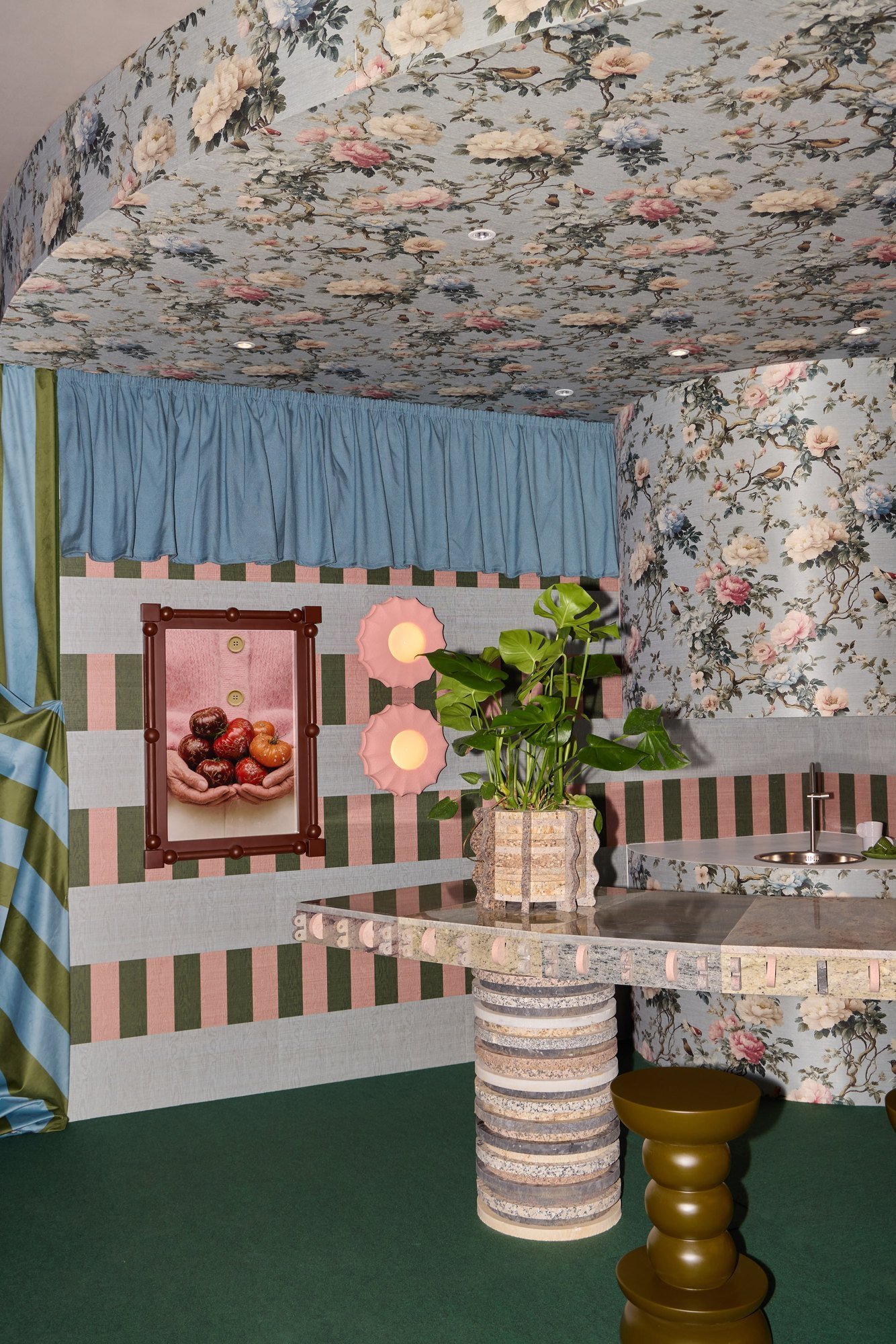
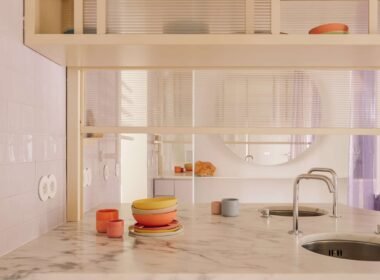
In the kitchen, decorative wallpaper and sculptural lighting frame a striking marble table developed with 18 Pies de Altura. Elsewhere, upholstered pieces and layered textiles sit alongside unexpected ceramic and timber forms.
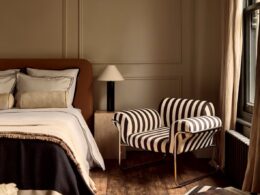
The bedroom explores a more intimate atmosphere through curtains, warm colours and expressive furnishings, including terracotta elements produced by Italian manufacturer Poggi Ugo.
These spaces are not intended to function as a conventional model home. They explore the qualities that make domestic environments meaningful: familiarity, comfort, curiosity and the possibility of spending time together.
The distinction matters. A comfortable interior is not necessarily one that looks soft, and an expressive room need not sacrifice intimacy.
Masquespacio is interested in both.
Materiality Takes on a New Importance
Perhaps the clearest evidence of the studio’s evolution is its attention to materials.
Textiles, once one part of Masquespacio’s expansive visual vocabulary, are becoming more central to the experience of its spaces.
For Feel the Shift, the studio collaborated with Exit Fabrics, incorporating several textile collections into the installation. Fabric is used not simply to upholster furniture, but to shape boundaries, soften architectural surfaces and establish a closer relationship between the visitor and the space.
The project also brings together wallcoverings developed with Muance, lighting and furniture produced with IberPoligraph, pieces made in collaboration with Really Nice Things, and handcrafted objects by several specialist makers.
The result suggests a growing interest in the expressive possibilities of collaboration.
Instead of working towards a perfectly uniform aesthetic, Masquespacio allows different techniques and materials to coexist within the same environment.
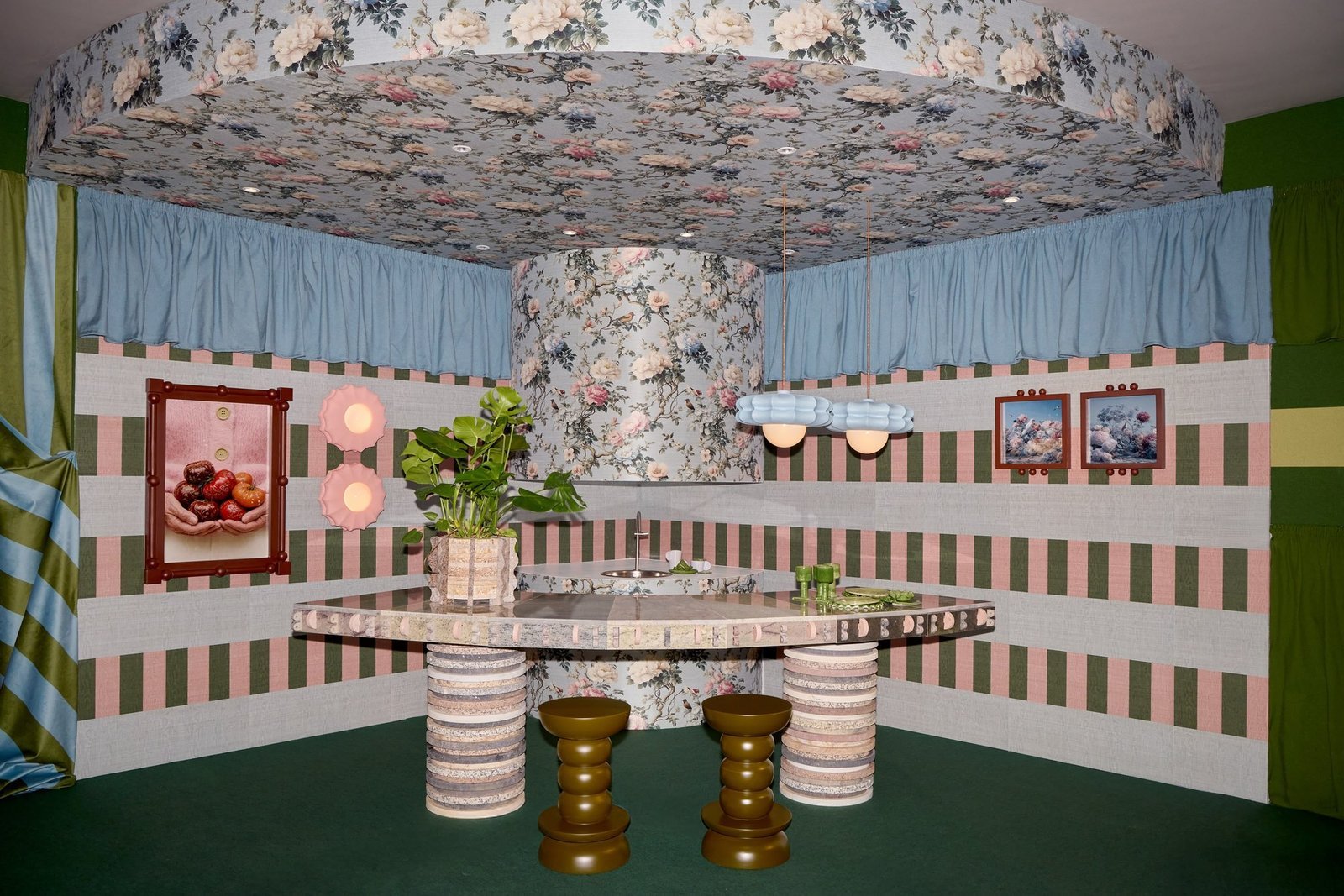
Some elements are polished and precise; others have a more irregular, handmade character. Soft textiles meet marble, timber and ceramics.
The contrasts give the installation a richness that could not be achieved through colour alone.
From Interior Design to an Artistic Universe
Feel the Shift also reveals an important evolution in the way Masquespacio operates.
Through Mas Creations, the studio is extending its creative language beyond commissioned interiors into furniture, lighting, decorative surfaces, artworks and independent collaborations.
The installation brings these disciplines together, with approximately 35 new pieces presented as part of a single environment.
Rather than displaying objects as isolated products, Masquespacio places them in conversation with architecture and one another.
A chair becomes part of a room. A wallpaper establishes its atmosphere. A sculptural lamp changes the character of the surrounding furniture. Individual pieces acquire meaning through the relationships between them.
Crucially, the installation is temporary, but the creative ideas behind it need not be.
Through Mas Creations, furniture, lighting, prints and other objects can continue into new collections, homes and collaborations.
It is a natural progression for a studio whose work has always moved between interiors, visual identity and product design. Yet it also gives Hernández and Penasse greater freedom to develop ideas outside the constraints of a traditional client brief.
The transition is as much about authorship as it is about aesthetics.
A Creative Identity in Motion
There is an interesting continuity between Masquespacio’s earlier work and this new chapter.
Projects such as Ichi Station in Milan demonstrated the studio’s ability to turn a commercial interior into an entire imaginary world, using futuristic forms, colour and light to create a distinctive atmosphere.
Feel the Shift employs a similar willingness to invent. What differs is the emphasis.
The studio’s imagination is now directed towards a richer sense of domesticity, where decoration, touch, craftsmanship and human interaction are given greater prominence.
It is tempting to describe this as a move away from spectacle, but that would be too simple. Masquespacio still enjoys theatricality. What is changing is the experience that theatricality is intended to produce.
Perhaps the most compelling aspect of Feel the Shift is its refusal to suggest that creative maturity must lead towards minimalism or seriousness.
Here, growing as a designer means allowing more complexity, more emotion and a little less certainty into the work.
For Masquespacio, change has not meant becoming unrecognisable.
It has meant finding new possibilities within an identity that was already entirely its own.