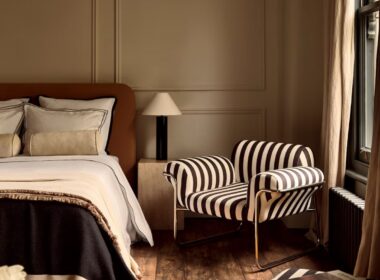

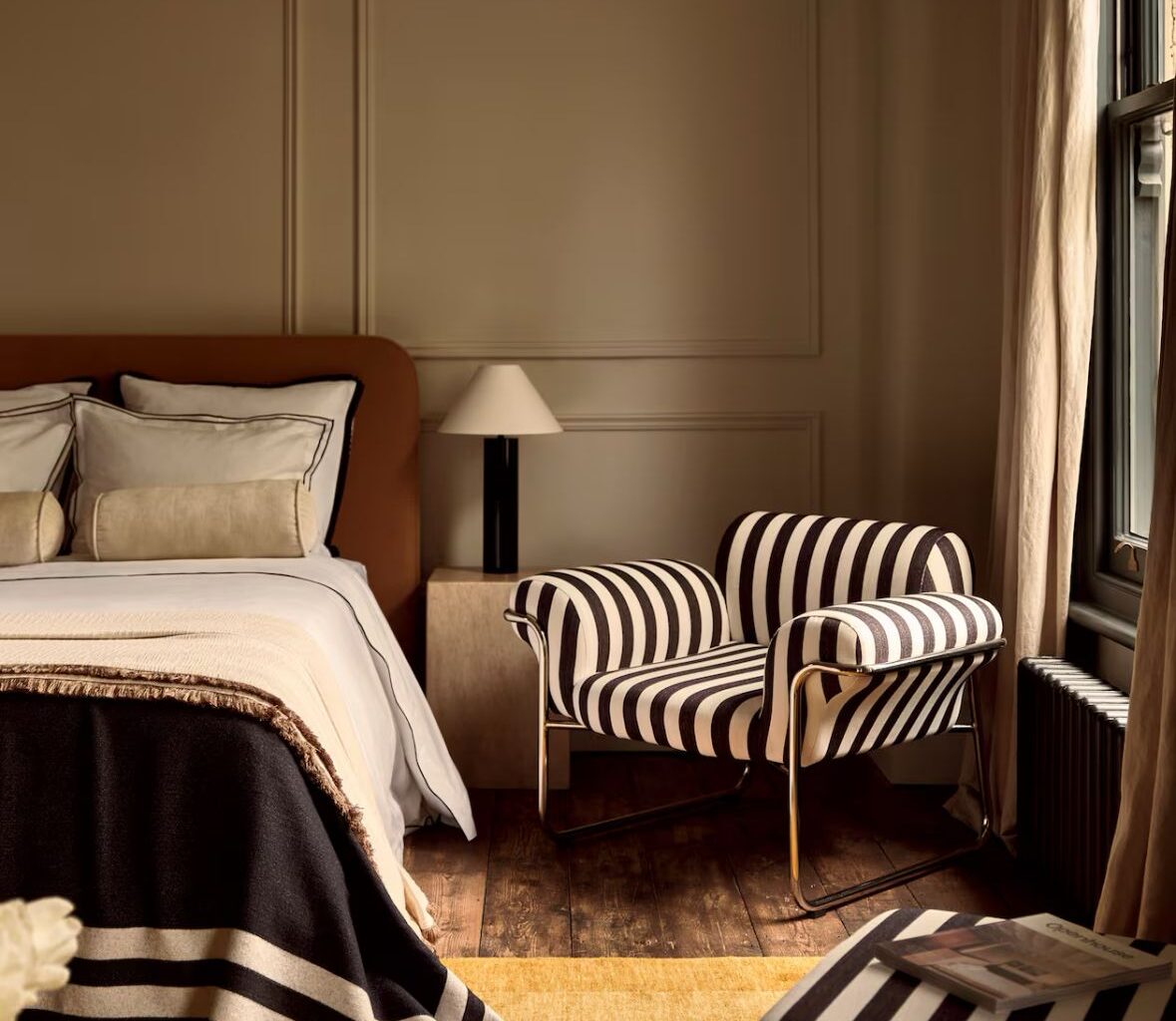
There are patterns that drift through the zeitgeist like seasonal fog, transient and purely decorative. And then there are lines that never truly vanish; they simply wait for the light to change. Striped interiors belong to the latter. In 2026 and beyond, striped interiors are being reinterpreted through a more architectural lens. Historically synonymous with the graphic exuberance of the 1970s – defined by ribbed timber, bold textiles, and a cinematic approach to wallpaper – stripes are resurfacing in 2026 with a newfound, quiet authority.
This revival is less demonstrative and more composed. What once framed a decade’s appetite for maximalism is now being recalibrated through material nuance and spatial precision. It is a transition from the “op-art” chaos of the past to a modern architectural rhythm that feels both grounding and ethereal.
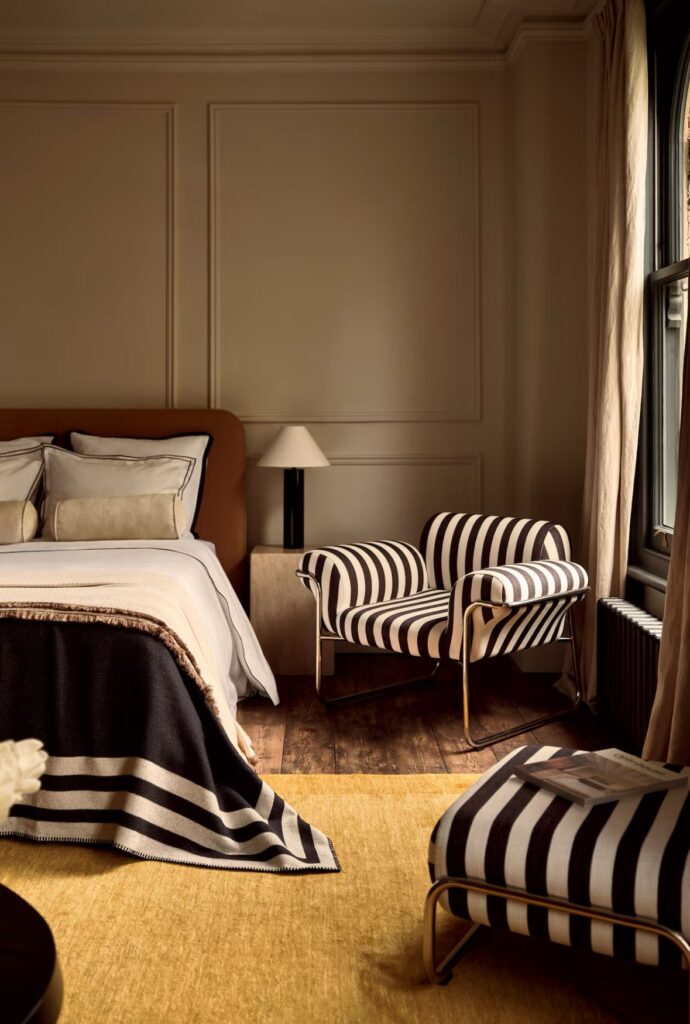
Why Striped Interiors Define 2026 Design
1970s interior design embraced rhythm without hesitation. It was a decade where interiors functioned as a stage for self-expression, oscillating between the tactile warmth of velvet and the slick modernity of chrome and lacquer. Stripes weren’t just decoration; they were structural punctuation. They gave height to low-slung conversation pits and direction to expansive, open-plan bungalows.
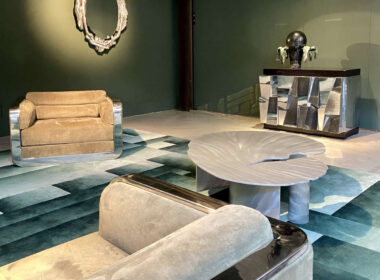
Today’s design landscape revisits that vocabulary with a highly selective eye. This is not a literal nostalgia or a “vintage” pastiche. Instead, as seen during recent editions of Milan Design Week, and observed in the world’s most exclusive design destinations—from the newly reimagined historic corridors of Six Senses London to the minimalist sanctuaries of Wuxi—linear gestures are appearing as embedded architectural details. We are seeing fluted plaster that catches the soft afternoon light and tonal wall coverings that seem to dissolve into the very bones of the room. The confidence of the 70s remains, but the volume has been lowered to a whisper, favoring texture over high-contrast colour. This is precisely why striped interiors feel relevant again in 2026.
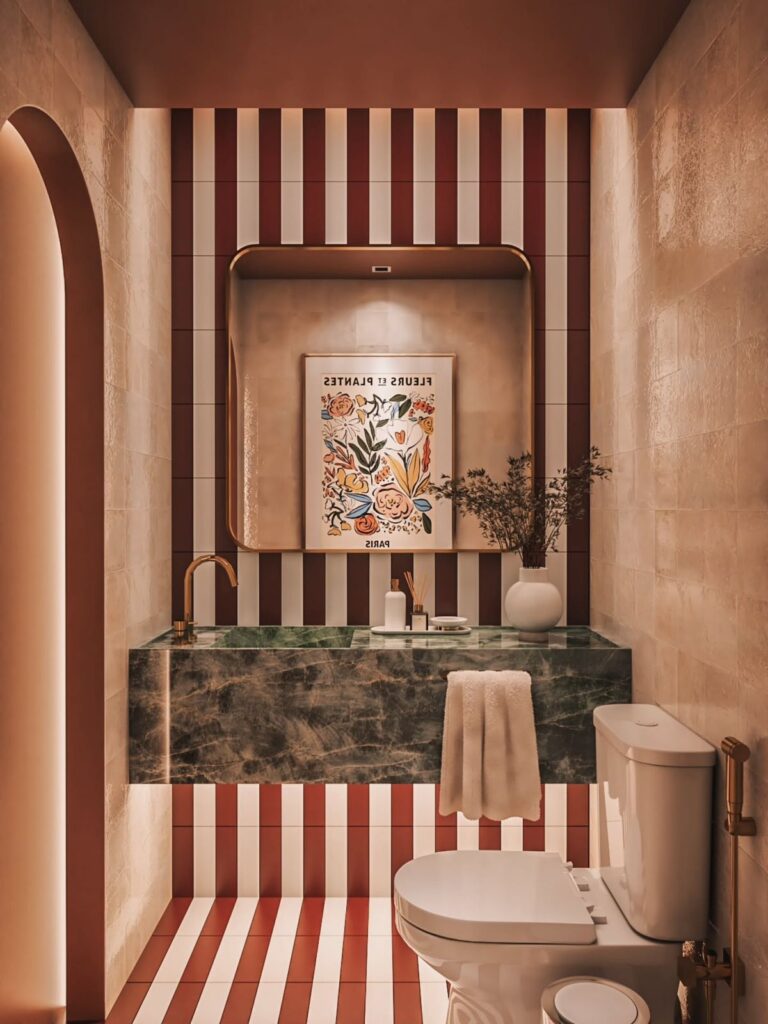
The Psychology of the Vertical: When Line Becomes Structure
Striped interiors resonate today because they offer a sophisticated answer to a growing “quiet dissatisfaction” with the flatness of digital-age minimalism. After years of uninterrupted white surfaces, walls are reclaiming their role as active participants in the domestic experience.
From an architectural standpoint, the stripe is a tool of manipulation:
Verticality and Aspiration: Vertical lines do more than decorate; they elongate. By drawing the eye upward, they celebrate ceiling height and create a sense of loftiness even in compact urban dwellings.
Horizontal Flow: Conversely, horizontal rhythms widen narrow passages, guiding the dweller through a home with a sense of cinematic motion.
The “Ghost Stripe”: Unlike the high-contrast “deckchair” stripes of the past, contemporary interior trends favour patterns created by the relief of the material itself—sand-colored thread against limestone or clay-based paint layered over rough plaster. The stripe becomes visible only as the sun moves across the room, creating a living, breathing environment.
- In many of the world’s most celebrated interior projects, these treatments are being used in transitional spaces—hallways and foyers—where proportion matters more than excess ornament.
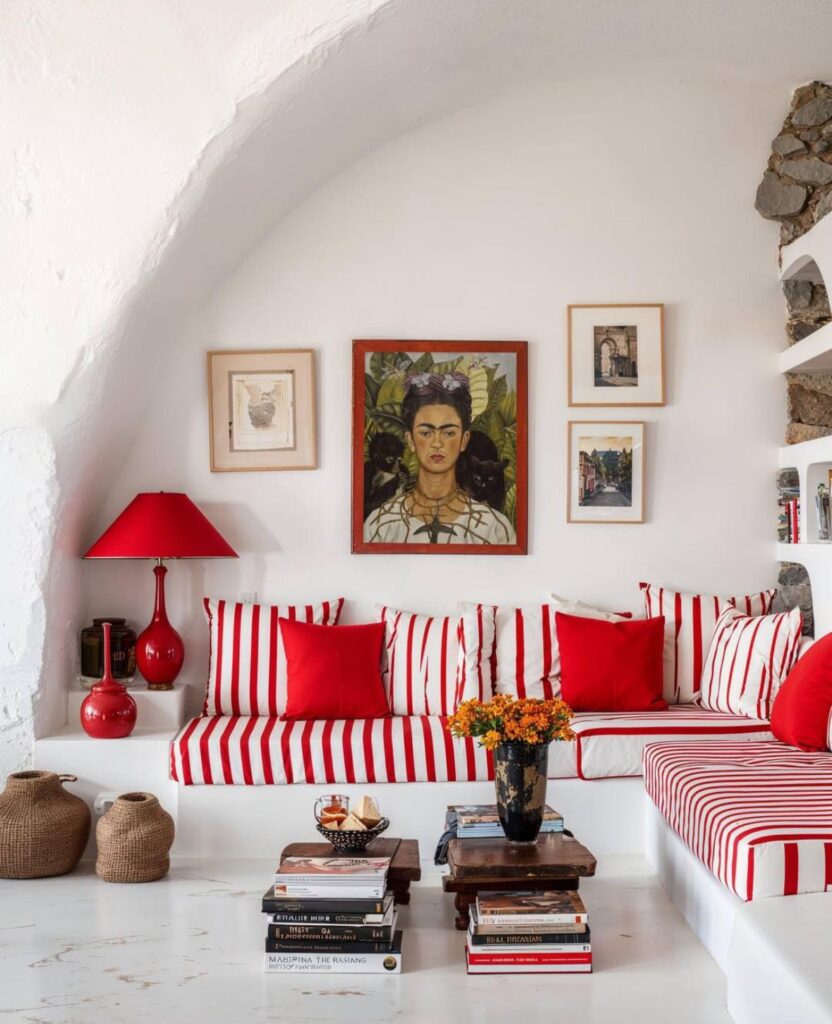
Material as Motif: The Evolution of Tactility
The most compelling expressions of the striped revival move beyond the surface of wallpaper and into the essence of the material itself. We are witnessing a shift toward “repetitive tectonics,” where the beauty of a space is derived from the repetition of a single, high-quality element.
1. The Warmth of Ribbed Timber
Walnut and oak are being reimagined through the lens of the 70s “slat wall.” However, instead of the heavy, dark paneling of mid-century dens, today’s timber stripes are finer—micro-ribbing that adds acoustic depth and a soft, diffused warmth. This aligns with the 2026 focus on material honesty, where the patina of natural wood is celebrated over synthetic finishes.
2. Fluted Lime Plaster and Stone
In the bathrooms and kitchens of high-end boutique hotels, we see a return to the tactile. Ribbed lime plaster offers a handcrafted finish that feels ancient yet modern. Similarly, designers are increasingly selecting stone slabs – such as Travertine or Cipollino marble – where the natural linear veining acts as a built-in stripe. Nature, it seems, was the original architect of the linear trend. In these spaces, striped interiors are not applied as decoration but integrated into the material structure itself.
3. Reeded Glass and Metallic Stems
This linear vocabulary naturally extends to design objects. Lighting fixtures featuring reeded glass cylinders or brushed metal stems echo the stripes on the walls. When light passes through reeded glass, it fractures, casting its own striped shadows across the room—a secondary layer of pattern that is purely ephemeral.
The Playfulness of Restraint
Within the broader scope of contemporary design, the return to linear articulation signals a deeper shift. We are moving away from “noise” and toward “intelligence.” The modern consumer is looking for surfaces that feel considered.
The 70s were about exuberance; 2026 is about refinement. Today’s stripes coexist comfortably with raw materials: hand-loomed textiles, chunky bouclé, and patinated metals. They introduce movement without disturbing the calm. It is a “playful restraint”—the ability to use a bold graphic element in a way that feels serene rather than overwhelming.
This trend is particularly evident in the hospitality sector. Boutique hotels are utilizing striped textures to create “zoning” within suites, using the rhythm of the wall to separate the rest area from the dressing area without the need for physical partitions.
A Revival with Staying Power
Trends often fade when they rely solely on novelty. Stripes endure because they are foundational. Since the dawn of classical architecture, we have relied on repetition – the fluting of a Doric column, the rhythm of a colonnade, the structure of a timber-framed house.
The 1970s merely amplified an instinct that has always existed in our subconscious. Contemporary design is now refining that instinct for a generation that values both heritage and innovation. Few contemporary design movements feel as quietly assured as striped interiors. Striped interiors today feel neither nostalgic nor avant-garde. They feel inevitable. They are a quiet insistence that our walls deserve to be treated with architectural intention.
The line has returned – not as a loud decorative gesture, but as a symbol of composure, craft, and the enduring beauty of rhythm.