
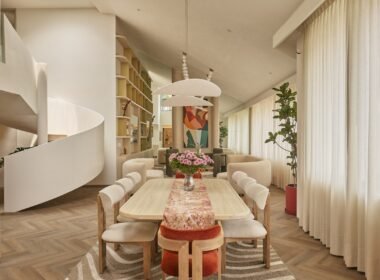
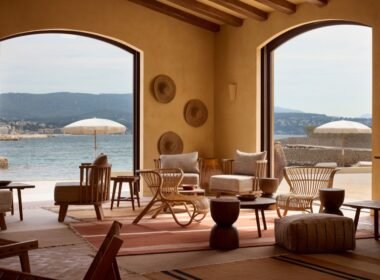

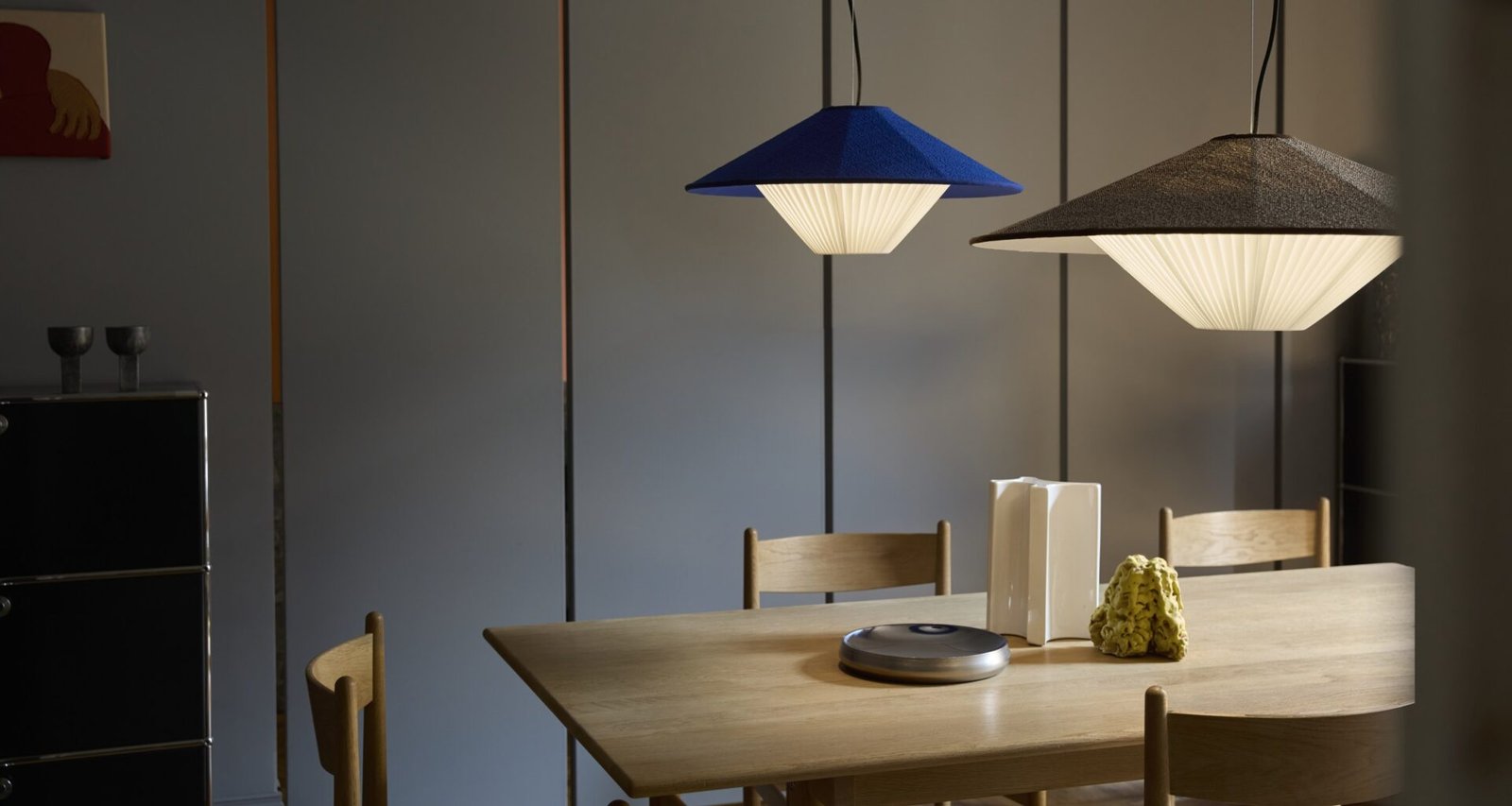
A favourite chair has a way of becoming the place where the evening begins. Give it a good lamp and somewhere to put a book, and a reading corner starts to take shape. Alessandro Stabile’s generous seating for S-CAB, Nao Tamura’s wooden lamps for Ambientec and SERVOMUTO’s fabric shades offer three distinct approaches to furnishing it, with as much attention to the pleasure of the room as to the page.
Finding a place to read
A reading corner need not occupy a corner at all. An armchair drawn up to a bookcase, or turned slightly away from the sofa, can make a surprisingly private place within a shared sitting room. The important decision is where to sit. A window offers daylight and somewhere to rest the eye between chapters; an alcove beside the fireplace may be more inviting after dark. Before choosing another piece of furniture, it is worth moving a chair into position and spending an evening there.
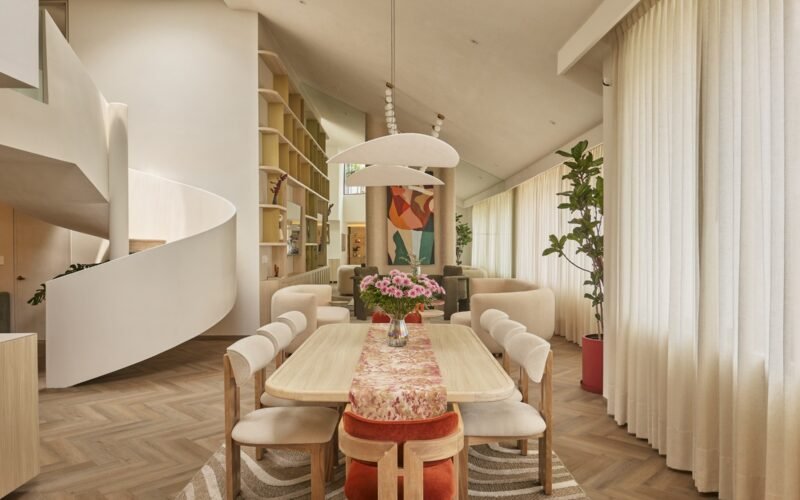
The architecture often suggests the arrangement. In PH Sócrates, TALO Atelier’s Mexico City penthouse, olive armchairs sit alongside a full-height bookcase, bringing the library into everyday living space. A smaller room can borrow that closeness between books and seating without attempting a wall of joinery. Even a short run of shelves gives a chair a reason to be there, while leaving the window, doorway and route through the room clear.
Choosing a reading chair
A beautiful chair can be an uncomfortable companion to a long novel. Seat depth, the angle of the back and the height of the arms all matter more once the book is open: a deep seat may suit someone who curls up with their feet tucked under them, while a reader who prefers to sit upright will want support closer behind the shoulders. Try the chair as you intend to use it. A few minutes perched on the front of a showroom cushion will tell you very little.
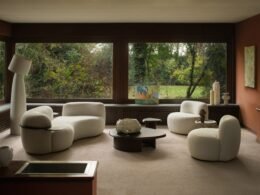
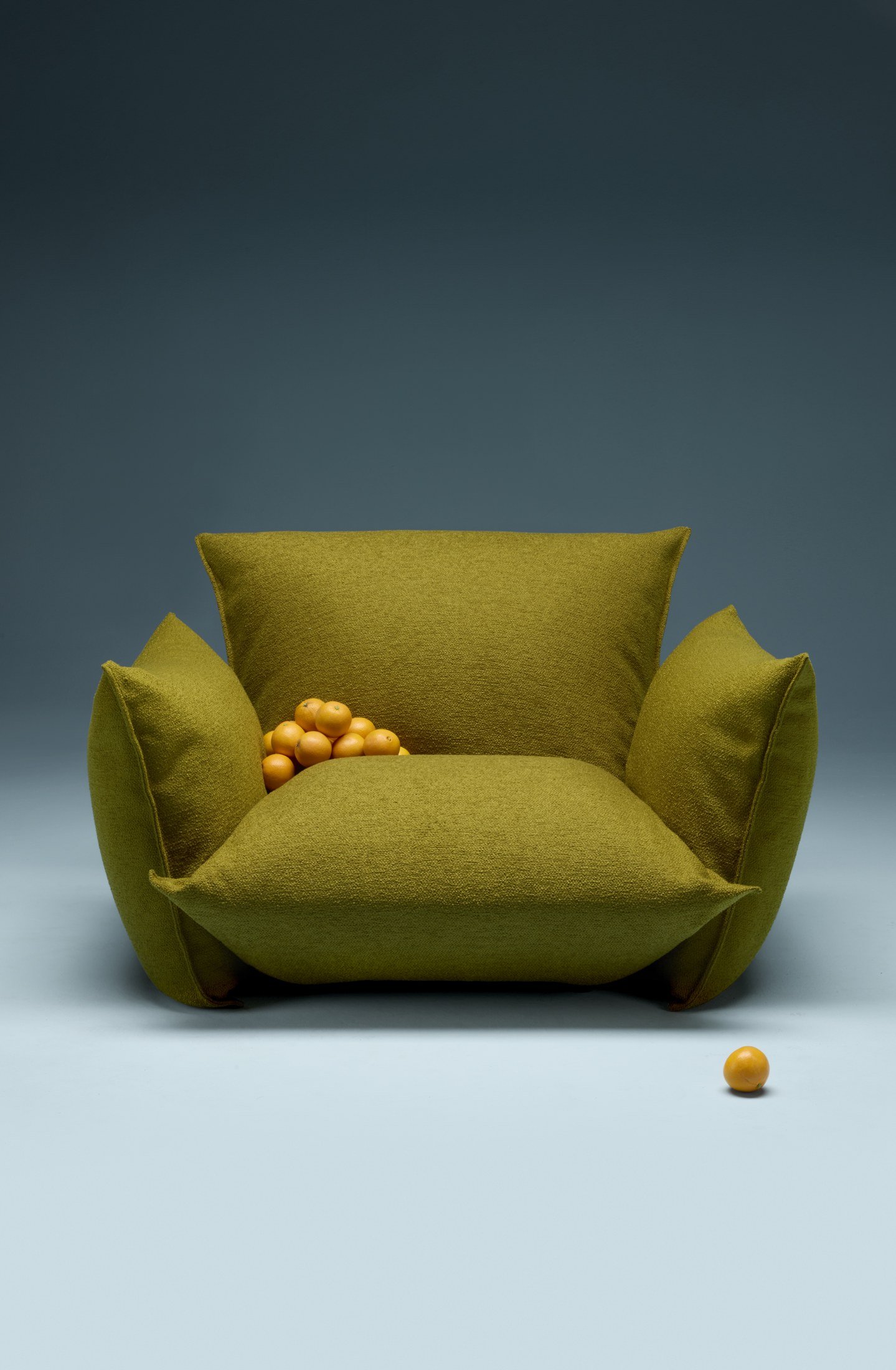
The green Brezza Relax Indoor by Alessandro Stabile for S-CAB has an appealing informality. Its oversized cushions fold over the supporting frame, allowing the upholstery to do the decorative work without piping, pattern or an elaborate silhouette. That generosity requires space. At 104 × 100 cm, the version with arms needs a proper place in the room, with enough clearance to walk around it and a table that can sit within easy reach.
A footstool changes the way a chair is used, but it also extends the arrangement well beyond the seat itself. In a compact room, a small movable stool may be more accommodating than a fixed chaise. There should still be space to stand up comfortably, set down a cup and pass through without stepping around the furniture.
Light for the page
The lamp deserves to be chosen from the chair. From across the room, a shade may look perfectly proportioned; sit beneath it and the bulb can be exposed, or the book left in shadow. Daylight arriving from the side is a useful starting point. For the evening, an adjustable floor lamp allows the beam to follow the reader, whereas a table lamp depends on the combined heights of chair, table and shade. Test the arrangement with an open book before settling on its position. The page should be well lit without a bright source shining into the eyes.
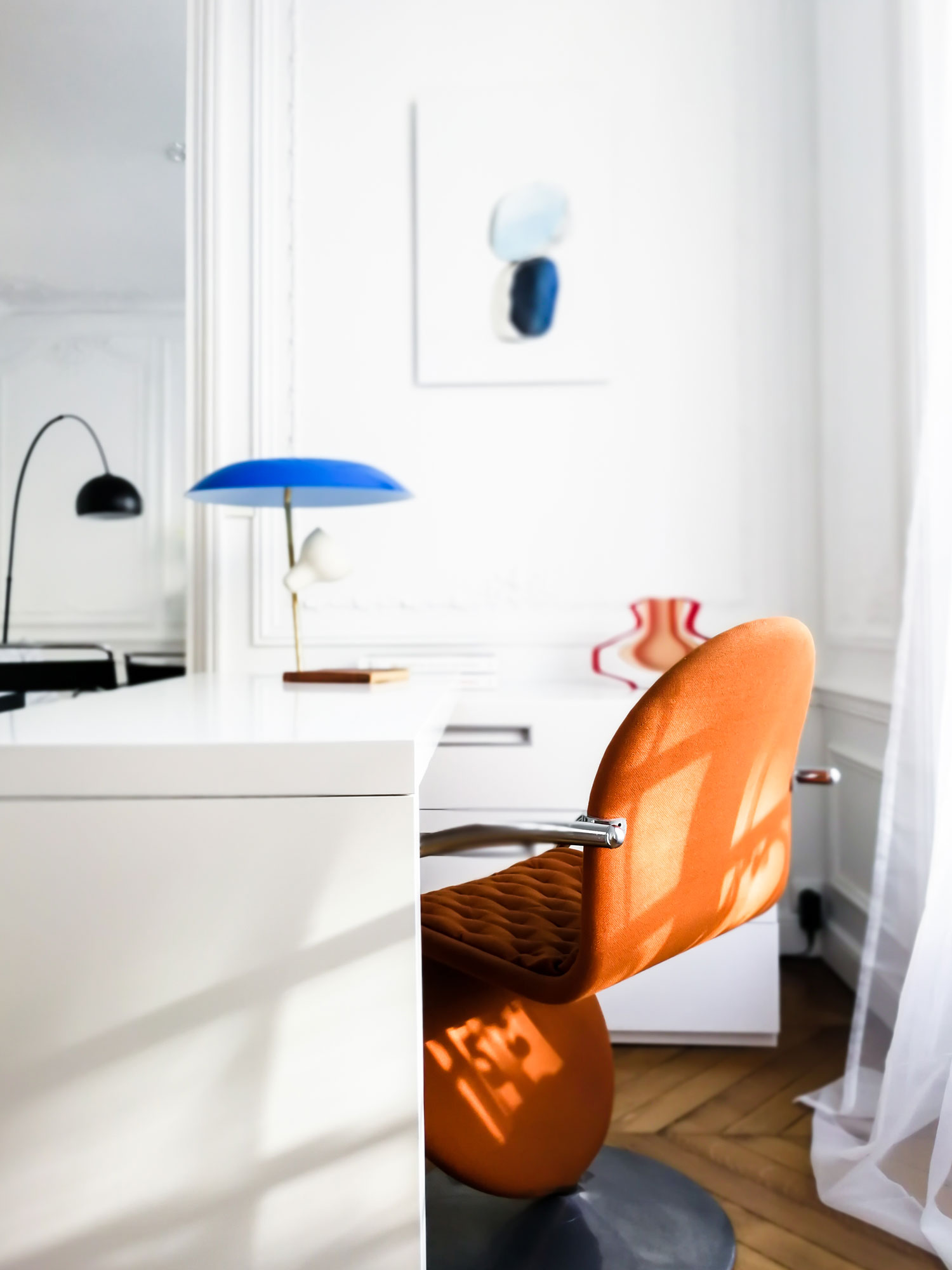
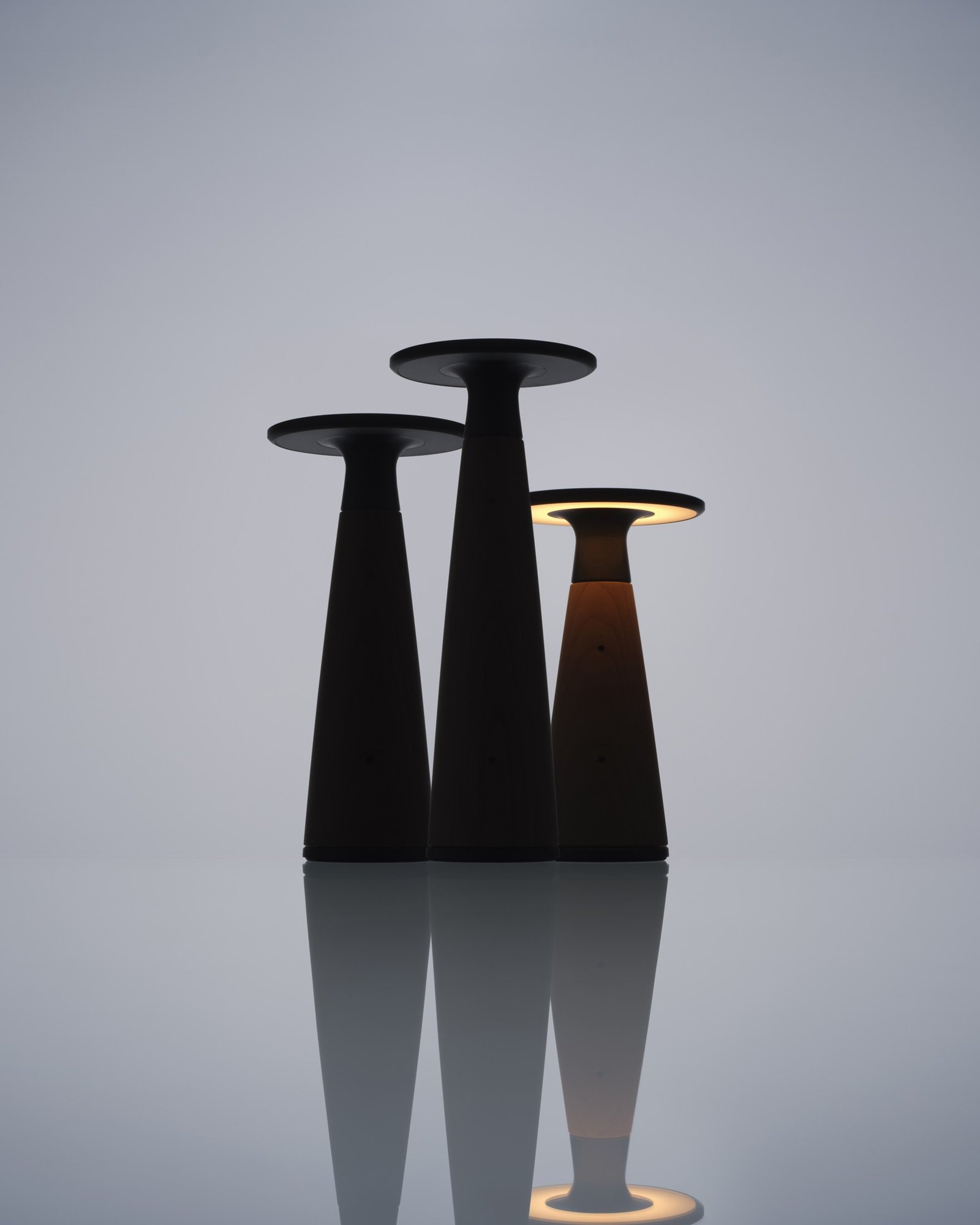
Nao Tamura’s Vosco for Ambientec dispenses with the trailing cable. Its broad, shallow head rests on a wooden body, with the LED concealed behind a Fresnel lens that distributes the light. The three maple versions pictured together reveal how much the proportions change with the length of that central stem. Four intensity settings allow the light to be adjusted, and the collection also comes in walnut. Portability is useful beside a freestanding chair, though it does not remove the need to bring the lamp close enough to the page.
The appeal of a fabric shade
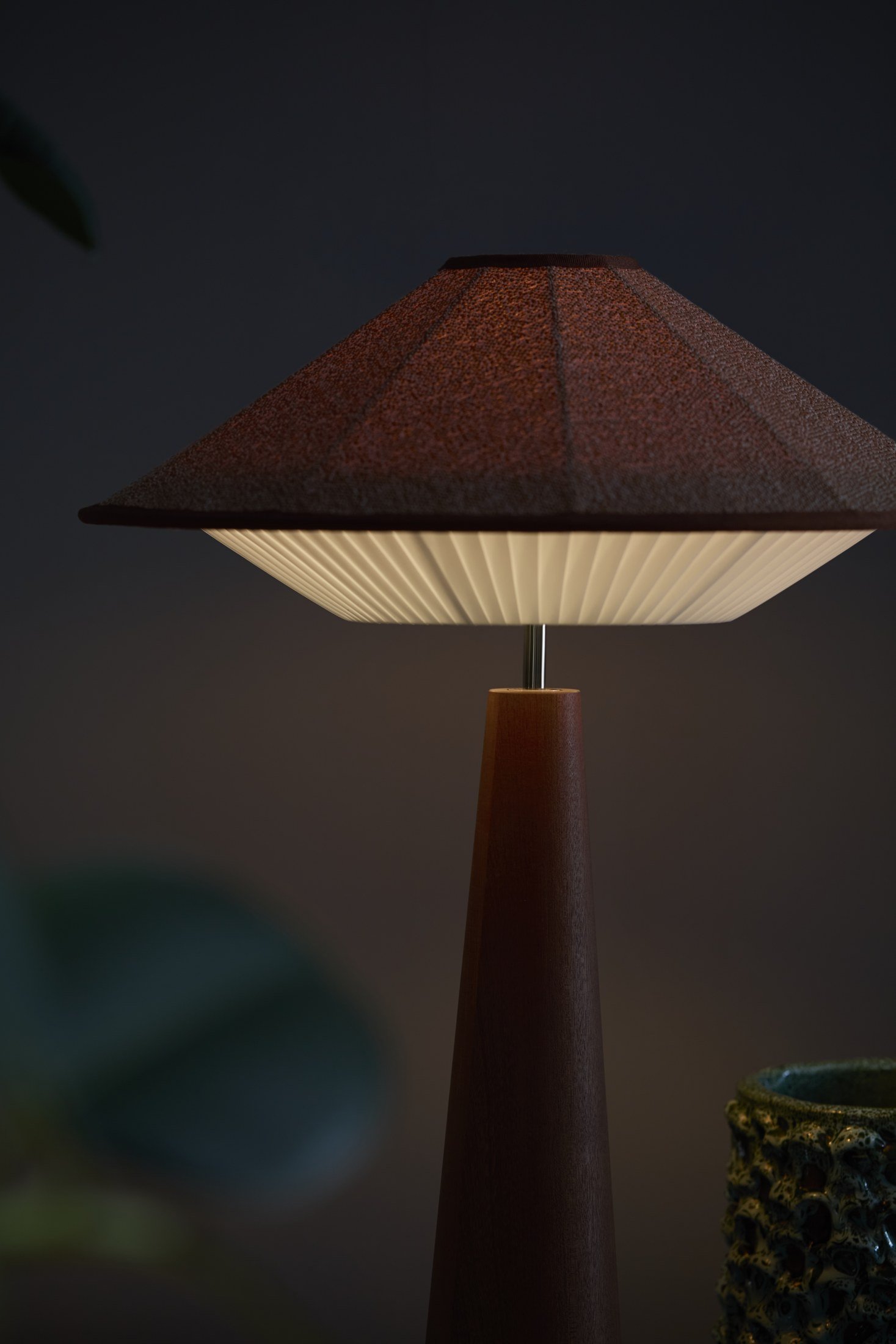
Alongside these compact, precisely shaped lamps, a fabric shade offers a more decorative presence. Its weave is visible in daylight; after dark, the cloth and pleats alter the way the light is seen from the chair. This is also a chance to introduce a textile without adding another cushion. A patterned shade might pick up a colour in the upholstery, while plain fabric allows the outline and proportions of the lamp to take precedence.
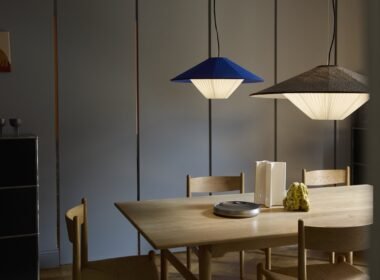
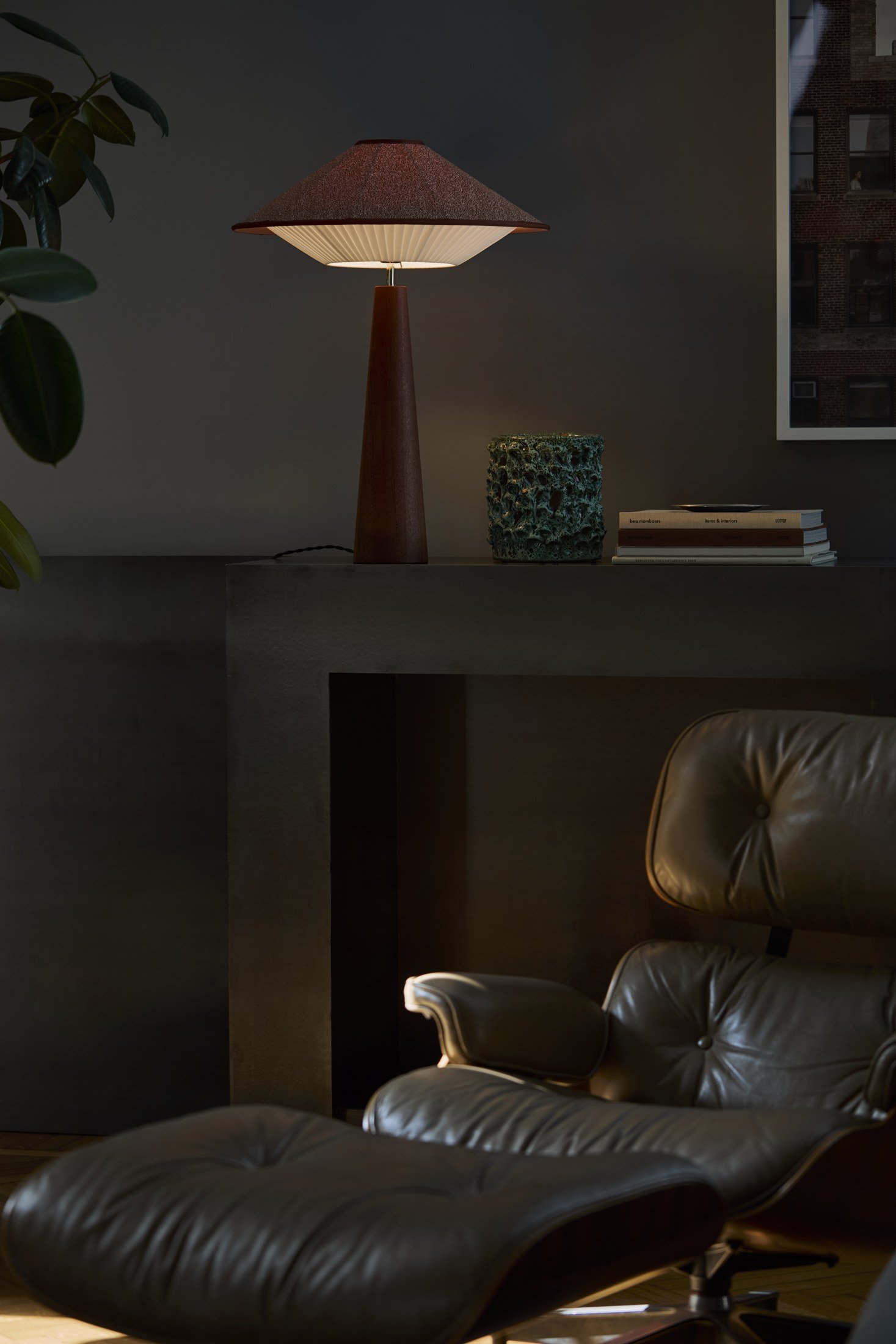
In the Milan apartment photographed here, SERVOMUTO’s Otto Table is paired with a leather lounge chair. The contrast is particularly good: the broad, angular shade sits above the soft creases of the seat, its pleated underside visible from below. A conical mahogany base anchors the composition. There is no need to surround such a lamp with a collection of small ornaments; its scale already gives the chair a convincing companion.
Living with books
Books bring their own irregularity to a room. A row of paperbacks, a stack of exhibition catalogues and a few large design monographs ask for different amounts of space, so the shelves should follow the collection rather than oblige every volume to fit the same grid. Adjustable heights are useful, as are deeper sections for books that would otherwise project beyond the edge. Check the load capacity, and secure tall shelving according to the manufacturer’s instructions. Once those practicalities are resolved, there is little reason to arrange every spine by colour: the books are here to be read.
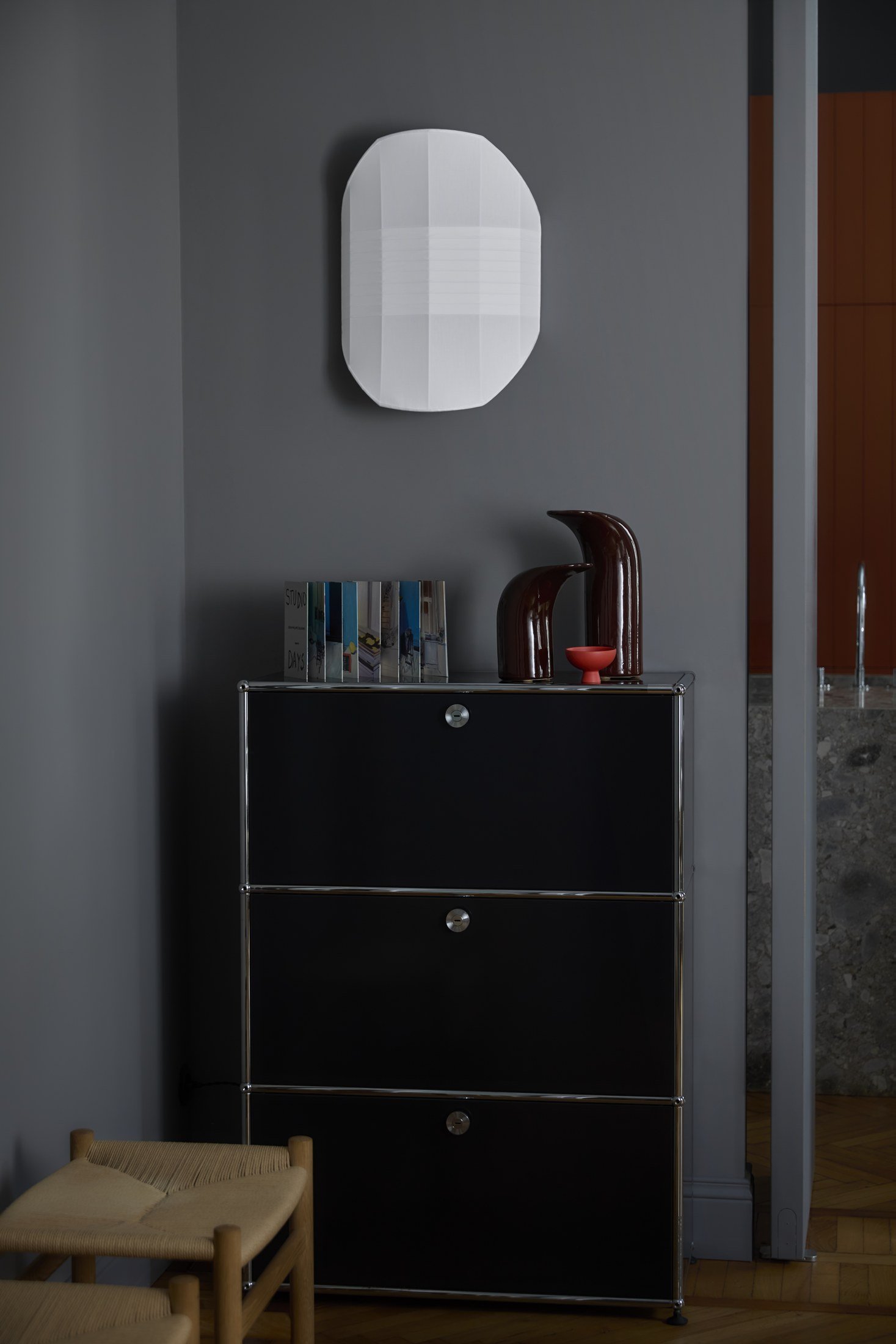
The low cabinet in the Milan interior offers a less imposing alternative to a bookcase. A small group of volumes sits beneath a sculptural white wall lamp, their pale pages standing out against the dark furniture. It is enough for the books currently in use, with the rest of the library elsewhere. Keep a little of the surface empty. The pleasure of having a table or cabinet beside a reading chair disappears when there is nowhere to put anything down.
Colour and texture, close up
This small part of a room can accommodate a bolder fabric than a large sofa might. A chair in a saturated colour gives the eye somewhere to settle; a stripe or loose weave introduces a different kind of interest, particularly beside smooth timber. The green Brezza shows how folds and generous upholstery can make plain cloth expressive. In the SERVOMUTO photograph, leather brings a more creased, lived-in surface into the company of a carefully shaped shade.
These are the details that make layering texture worth considering at the scale of a single chair. From that seat, the underside of the lampshade and the grain of the nearby table are no longer distant decorative choices; they are what you see and touch every evening. Leave room for the things that arrive through use, too: a book set aside halfway through, a pair of glasses, the cup that needs a coaster. A reading corner earns its place in the house when someone keeps returning to it.
Design & photography
Featured designs: Brezza Relax Indoor, Alessandro Stabile for S-CAB; Otto Table, SERVOMUTO; Vosco, Nao Tamura for Ambientec. Photography: Odeon (S-CAB), Sara Magni (SERVOMUTO, including cover), Hiroshi Iwasaki (Ambientec). SERVOMUTO shoot styling: Marchesini Sarno.